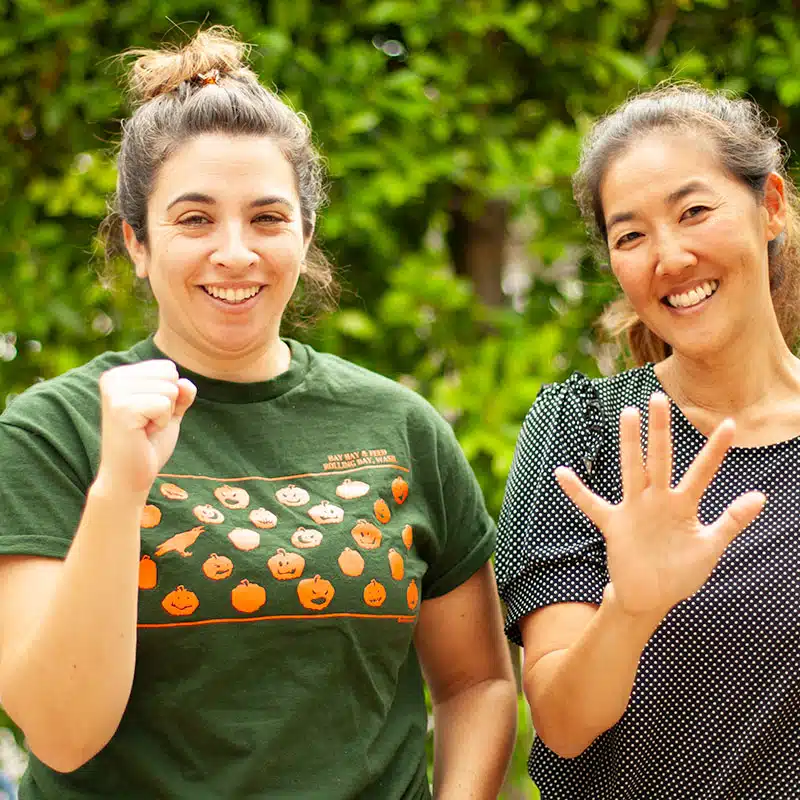
I am a big fan of using hand gestures in facilitation (I have written elsewhere about my love of the quiet coyote).
To my mind, the undisputed champion of hand gestures for facilitation is the “fist-to-five.”
The gesture itself is very straightforward: Everybody in the room holds up either a fist, one finger, two fingers, three fingers, four fingers, or five fingers.
The facilitator takes a look at the raised hands, and immediately has valuable information about both the group as a whole, and each person as an individual.
There are four ways I recommend using the fist-to-five, which I will expand on in this piece:
- To see how much time people need to finish something
- To gauge how well everyone understood your instructions
- To get a temperature check about anything
- To reach consensus on a decision
I’ll end by explaining a variation to make it more anonymous: asking everyone to hold their hand in front of their chest.
Now, here are four ways to use the magical, versatile, fist-to-five:
1. To see how much time people need to finish something
This is what I use the fist-to-five for most often.
It works particularly well when I’ve assigned a reading. I just say “How much more time do you need, fist to five?”
This shows me how many people are finished, and how much more time people need. It also provides useful information about the “spread” within the group—that is, if everyone is either a two or three, that requires different facilitation from if some people hold up fists and others hold up fives.
2. To gauge how well everyone understood your instructions
Imagine the following scene: you finish explaining a task, everyone looks ready to go, then you ask “Fist to five, how clear are you on what you need to do?” The hands go up and the highest number in the whole group is a two.
You re-explain, check again, get all fours and fives, and carry on.
This fist-to-five just saved your workshop.
3. To get a temperature check about anything
For this one, just ask a question and explain the scale. Here are some examples:
- How prepared do you feel for the show? Five is totally prepared, fist is “I have no idea what I’m doing”
- How much do you agree with the reading? Five is “I wish I’d written this myself” Fist is “I want to go to war with this author”
- How tired are you this morning? Five is “I’m so energized I can barely stay in my seat” Fist is “I’m basically asleep right now”
4. To reach consensus on a decision
I learned this one from the Network for College Success, who got it from the Free Child Project.
This uses the fist-to-five as a quick way for everyone in a group to weigh in on a proposal. The key thing is that no proposal can go ahead unless every single person has held up at least three fingers.
Here are the details of what each number of fingers means. The language below is adapted from the Free Child Project website:
- Fist: I need to talk more about this proposal and see serious changes in order for it to pass.
- One Finger: I need to discuss certain issues and suggest changes that should be made.
- Two Fingers: I am more comfortable with the proposal but would like to discuss some minor issues.
- Three Fingers: I’m not in total agreement I’m will let this pass without further discussion.
- Four Fingers: I think it’s a good idea/decision and will work for it.
- Five Fingers: It’s a great idea and I would be happy to take the lead on implementing it.
Variation to keep it (fairly) anonymous: hand in front of chest
If you want people to share their number without everybody seeing it, you can tell them to hold their hand in front of their chest.
This is obviously not completely anonymous, but it means that everybody’s “vote” isn’t visible to every single person in the room.