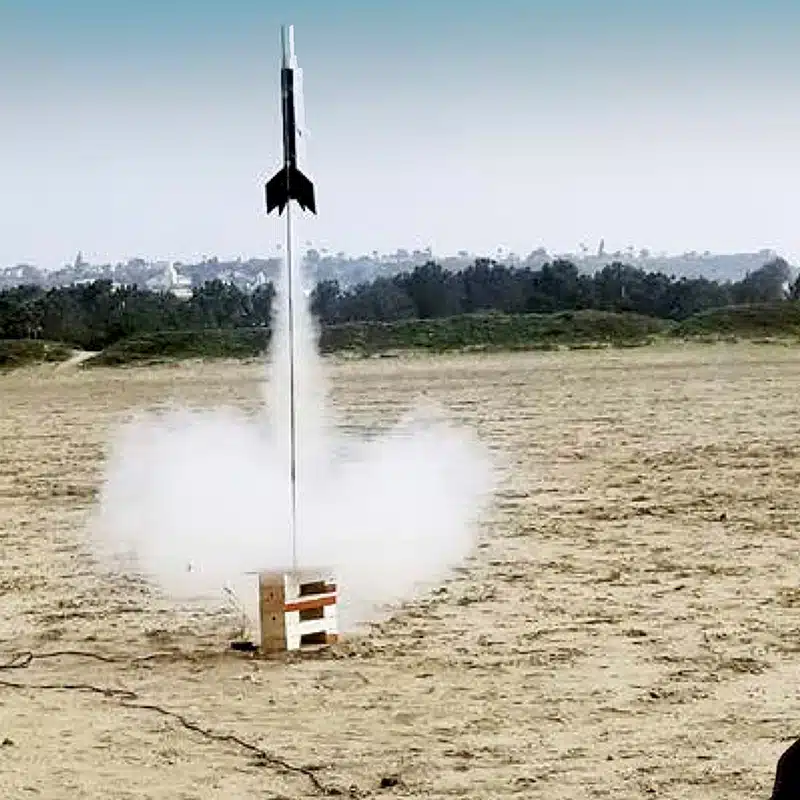
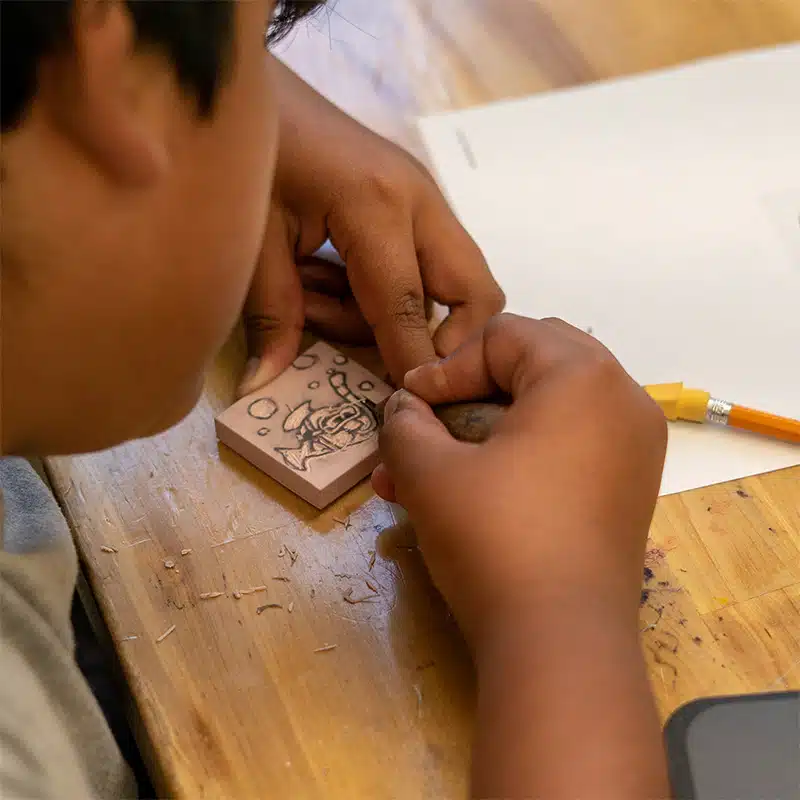
Andrew Lerario is a co-founder of Blue Dot Education, a nature-focused project-based learning organization. Before that, he taught at High Tech High for 16 years. In one of his most impressive projects—which he ran with teaching partner Adam Borek—students designed and built metal rockets from scratch and launched them from the Friends of Amateur Rocketry launch site in the Mojave Desert. The rockets went between 6,000 and 8,000 feet in the air and reached Mach 1. This wasn’t a specialist engineering course, it was a normal physics class.
In this article, Andrew explains how he uses the iterative design process to give students more power within projects and share the cognitive load of project management. The article is an edited excerpt from an episode of the High Tech High Unboxed podcast. You can listen to the full episode here.
What “Iterative Design” Means in PBL
Andrew Lerario:
In my projects, iterative design means beginning with something that is really small and easy to access; something that represents what is to come.
A key idea for me here is “sharing the cognitive load.” Teachers often try to think of all the potential outcomes of a project, and come up with answers to every single thing that might come up. The idea behind sharing the cognitive load is that you don’t have to have an answer. As the project unfolds, answers are going to emerge from the work.
This also means that students are allowed to identify the things that are significant in their learning, and this becomes part of what you’re developing within the classroom. You could say it becomes part of the educational currency—that which is valued.
The Rocketry Project: Starting with Minimum Instruction
Andrew Lerario:
When we first did the rocketry project I didn’t know how to build big rockets, but that was the goal. So as an adult learner, I engaged with the students and said, “What can we begin with?”
We decided to start with paper rockets. The first day we just rolled up some paper rockets and attached them to a tube connected to a two-liter soda bottle that we stomped on.
What was important for that first iteration is that students could engage creatively, with minimal instruction.
Alec Patton:
Why is that minimal instruction important?
Andrew Lerario:
It establishes an expectation that students will not be told what to do or how to do it. They are going to be given creative capacity within this work, and their voice will be valued within the community that we build together.
Alec Patton:
And when kids are building paper stomp rockets with minimal instruction, how many of those rockets do you expect to be functional?
Andrew Lerario:
Even if just one functional out of the whole class, you can build shared knowledge from there.
I recommend you shoot a video of those initial stomp rocket launches. Then, the class can review the video together and ask, “Which ones worked? Which ones didn’t? Can we put ones that performed similarly together and explore what design features they share?”
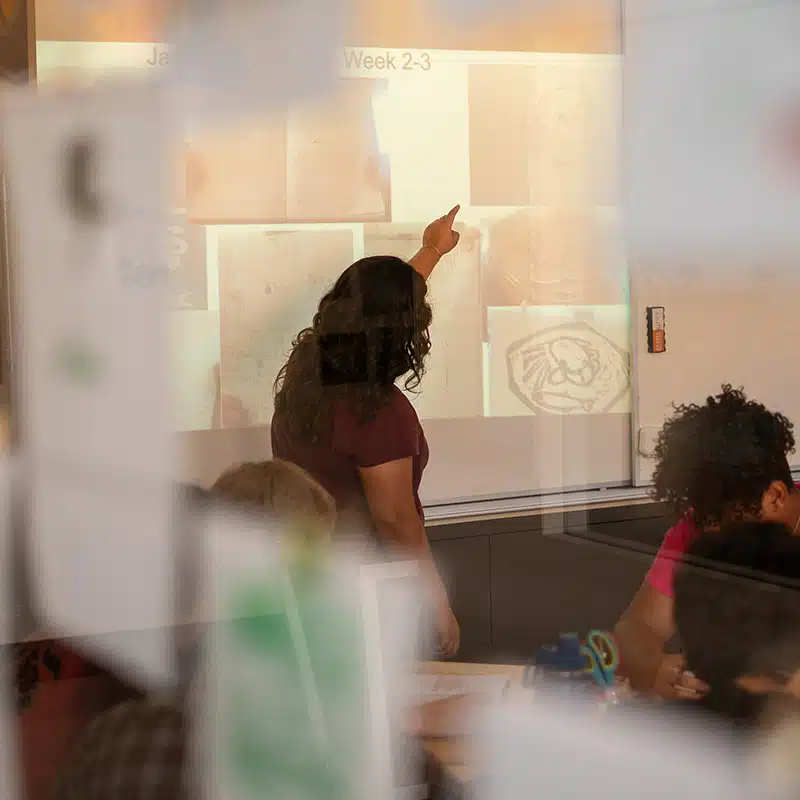
Then you can set up the room to do a gallery walk to look at the designs. You set up a gallery walk by having everybody set their work up around the classroom, and tell each student to write questions that they want answers to next to their work—for example, “How could I modify this design to get it to fly straighter?” Students then roam throughout the room, study each other’s work, and write responses to the questions on post-its.
As you go through multiple iterations, the gallery walks become more focused. Kids get used to the process and tend to respond to it more. They increasingly operate within the building process and the design process, knowing that’s going to come next.
On that first day of the rocket project, after our gallery walk, everyone made a second paper rocket. After we did a second round of launches, we asked the same questions: “Which ones worked? Which ones didn’t? What are the characteristics of the ones that worked? How are we implementing those characteristics in our designs?” These questions led us to deeper ones: Why do these characteristics work? And that led us to physics. Then we could start looking at how to design better models moving forward.
Eventually we started building rockets with cardboard tubes and building our own motors.
We looked at model rocket kits together and figured out how we could re-create them with our own materials. By the end of the project, kids were running their own teams because throughout the iterations, they identified what they were good at and what contributed to a collaborative team structure. Ultimately they built huge metal rockets that went 8,000 feet and reached Mach 1.
Alec Patton:
Were there times you thought, “I could just tell them all how to do this and we would save three weeks?”
Andrew Lerario:
If you know how to do something, that’s not something to keep from kids. But how you share what you know is important.
In this communal learning structure, everyone brings something to the table. As teachers, we bring our mastery of subject content, which is one part of doing the project. We also bring adult learning habits to the project work.
Bearing that in mind, I would never tell students “how to do it” because that’s presumptuous, but I would share, “This is my approach to trying to figure this out, and I’m going to engage all of you in a similar approach and see what we figure out.”
This is important because even when I’m confident that I have an answer, I can’t be sure that it’s the best answer for the situation. I always invite more students into the discussion, even if the things that are contributing might not influence how we decide to proceed. We’re still considering their ideas and, more often than you would expect, those ideas do change what we determine to do next.
Alec Patton:
What are ways this approach can go wrong?
Andrew Lerario:
Planning with too many expectations in mind. It is more important to trust the process.
Also, it’s important for a teacher to be a conduit of energy rather than shutting it down. I never knew we were going to end by building those big rockets, but the energy of the classroom went there. So if you trust the process, it leaves the opportunity open to really follow those creative energies within the classroom. You’ve got to be intentional: You can’t follow every potential tangent, but you can be alert to, “What is the next step from here? What are the interesting questions we want to pursue from this one?” And it doesn’t necessarily lead to a fancier, shinier product to put on the wall, but it definitely leads to a better experience—the students are going to have a personal, distinctive story about their learning to share at the end of this process.
Alec Patton:
When you were building stomp rockets, what was your essential question? Do you remember?
Andrew Lerario:
I guess the essential question was “Can we do rocket science?” But really, the rocket project was about hope—because the idea was, “How can we do something incredibly difficult within a school, something that kids typically don’t study at this age because it’s perceived as being too challenging?” So by the end of it, one of the outcomes I was looking for was for kids to emerge with a greater sense of confidence and hope for the things that they could accomplish. Because from the project they developed a sense that because they had already done rocket science, they could do anything.