published

Listen us AT any platform
Share this
By
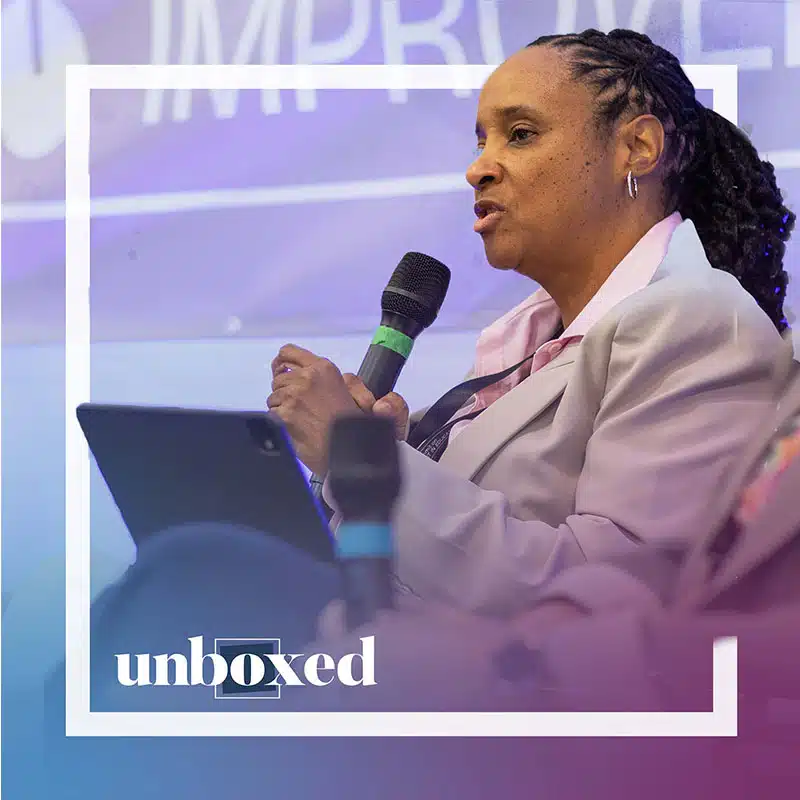
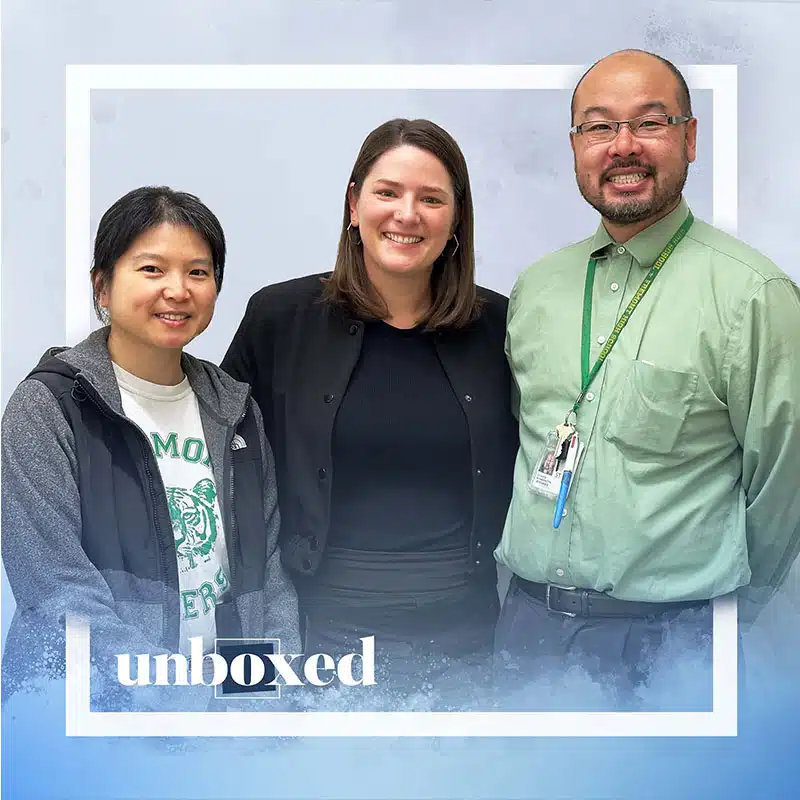
Alec Patton talks to Beverley Jenkins and Kate Hogan of the System Improvement Leads Networked Improvement Community and Nicole Leveille of Cloverdale Unified School District about how Cloverdale dramatically increased the percentage of students with IEPs in the general education population, and cut chronic absenteeism among students with disabilities in half.
Every other week, we publish a newsletter with great resources like this one, sign up for it here!
What are you waiting for, register for the National Summit for Improvement in Education before you miss out!
Episode Notes:
0:05
Hi everybody. This is High Tech High Unboxed, I’m Alec Patton. Today I’m going to tell you about Cloverdale Unified School District in Sonoma County, California. Here’s the shortest possible version of the story I’m about to tell you three years ago, in the fall of 2022 only half of the students with special educational needs in Cloverdale were learning alongside their peers in the general education population. Two years later, three quarters of students with special educational needs were learning in the general education population. So that is a 25 percentage point jump. And here’s another related statistic for you. In the fall of 2022 half the students with disabilities in Cloverdale were chronically absent. Half of them think about that for a minute. Two years later, that percentage had shrunk to less than a quarter. How did Cloverdale do it? For starters, they got connected to the system improvement leads. Networked Improvement community. System improvement leads, or CIL for short, is a team of improvement coaches with special education expertise. Picture the A team, but for special education, the CIL improvement coaches are based in the El Dorado County, Office of Education, El Dorado County, SELPA and the Riverside County. SELPA and CIL is supported by the California Department of Education and the California Collaborative for Educational Excellence. Now CIL runs a Networked Improvement community focused specifically on IEP goals. If you aren’t totally sure what that even means, don’t worry. We’re going to get into that in just a second. But first an announcement. I’d be remiss if I didn’t tell you that if you want to connect with people from across the country who are doing cool stuff like this, there’s only one place you want to be from March 30 to April 1 2026 that is San Diego, California for the National Summit on improvement in education. In fact, Beverly Jenkins, who you’ll hear from in this episode, will be presenting book your spot today while you still can we got a link in the show notes. Now back to IEPs and back to the system improvement leads, Networked Improvement community, which is obsessed with them. When I started my career as a high school teacher, IEP, documents felt like books of magic. I knew they were powerful. I knew I didn’t really understand them, and I knew they were to be treated with respect. Okay, actually, I should go back the first time I heard those magic letters, IEP, I had no idea what they meant, just in case, that’s how you’re feeling right now. Here’s a brief introduction. IEP stands for individualized education program, and it goes back to a law that passed in 1975 the Education for All Handicapped Children Act. In 1990 Congress reauthorized that law and renamed it the Individuals with Disabilities Education Act or IDEA. I didn’t realize how important that act was until I started researching for this episode, but it set down some principles that seem unusually cool for a piece of federal legislation. First, there’s the right to a free and appropriate public education for all children, regardless of their specific needs. Next, every child has the right to learn in the least restrictive environment. In other words, to the greatest extent possible. Kids with disabilities should learn alongside all their peers, not be in separate classes. And then there’s the IEP, a legally binding document crafted by the school in collaboration with parents and ideally with the child himself, which includes the child’s current performance levels, annual goals, specific services to be provided, and the extent to which the child would participate in regular classes, that is to say just how restrictive the least restrictive environment needs to be for that particular child to thrive. For the past 50 years, that’s been the law of the land. But it’s one thing for Congress to pass a law, and quite another for every school in the country to make sure every student with a disability has an IEP that’s up to date and serves their needs. When I was teaching high school, IEP meeting was a phrase that showed up in my calendar a lot, and the reason for that is that it takes a great deal of time and effort to do IEPs well. But I don’t think we talk about this enough. Like many things that happen in school, IEPs take a lot of time and effort, even if you’re doing them badly. I want to point that out, because I think it’s important to the story you’re about to hear. I about to hear. It’s not like there’s a bunch of schools that aren’t spending a lot of time on IEPs, everyone’s spending time on IEPs. And despite that, it’s no secret that across the United States, every kid does not currently have access to a free and appropriate public education in the least restrictive environment, not because there’s anything nefarious going on, just because, like I said before, it is so much easier to pass a law than it is to implement it in every school in the country for every child who needs it. This brings us back to CIL the system improvement leads, network improvement community, like I said before, CILs, network has gone all in on IEPs. And when I say all in on IEPs, I don’t mean they’re focused on special education. I mean, they are focused specifically on the goals in the document itself. Their target is to increase the number of IEP goals met in their districts to 100% I emailed Beverly Jenkins, a project coordinator at CIL to ask why they went all in on IEP goals specifically. She told me, IEPs matter. Because they provide a roadmap detailing student needs and how to meet them. At the heart of the IEP are goals drafted based on each student’s unique skills and areas of need. Beverly added that there is no official mechanism for tracking IEP goal completion at the state or national level, which is pretty wild. So SIL pulled the data themselves. They took a random sample across six different counties, and found that less than 40% of IEP goals were being marked as met when they started. CIL was a network spanning those six counties where they taking the random samples, and that was in the fall of 2021 Okay, so we’ve covered what an IEP is. We’ve covered why IEPs matter, and we’ve covered what SIL is trying to do, which is to take the number of IEP goals met up to 100% and if you’ve been listening closely, you might remember that I opened by talking about this district called Cloverdale unified. And you might be thinking Cloverdale must have been a part of that first network in the fall of 2021 and you’d be wrong. Cloverdale didn’t join until 2023 and this is what I think is really interesting, they didn’t join by choice. They joined because the California Department of Education found them to be out of compliance with the Individuals with Disabilities Education Act and told the district they had to join. As you may recall, in 2022 only half of students with IEPs at Cloverdale were learning the general school population, and half the students with disabilities were chronically absent, so the district was put in what’s called the compliance and improvement monitoring process. Cloverdale is a small district, one elementary school, one middle school, one high school and a continuation high school, all told, it serves about 1260 students, over half of whom qualify for free and reduced lunch. It’s in wine country, and lots of the students’ families work in the local vineyards. I was so curious as soon as I heard about cloverdale’s story, because if anyone had asked me if I thought it was a good idea to compel school districts to join improvement networks, I would have said absolutely not. And yet, their success speaks for itself. I wanted to know what the vibe at Cloverdale was like when they started working with SIL. So I asked Nicole Ave Cloverdale Director of Special Education and Student Services, and she dropped something of a bombshell
7:09
at the time. I started in the summer of 2023 our superintendent was also starting, and all three principals were also starting in their roles. So there was this big shift in our district in terms of leadership.
7:25
So the vibe was the entire leadership team has been replaced, and the new leaders, at least, were excited. I asked Beverly Jenkins, the Project Coordinator at CIL, how they went about welcoming a district to their improvement community when the district wasn’t there by choice. She told me that by the time Cloverdale joined, sil had its onboarding process locked in first enrollment meetings,
7:47
we just meet with all the teams individually and front load, really focusing on the network purpose and the vision and making sure there’s alignment there, or sort of identifying the alignment, then an online orientation. We meet virtually with all of the new teams, and we kind of go over purpose again. We get to know each other like these are going to be your people for this year going forward. So once the network launches, those are the same faces that those cohorts will see in like workshop and paired team time to talk about their work. So we lay that foundation before the first learning session also.
8:31
And if you take only one thing from this episode, make it this, they gave everyone a glossary of acronyms,
8:38
like a cheat sheet of like, here’s all of the random acronyms that you might hear, and here’s what they mean, and also, like interrupt, ask questions, and you can always go to your coach, who you know is assigned to your team.
8:52
One important piece of this onboarding is setting expectations about the improvement process, because it’s different from what most schools are used to.
9:00
I tend to say that I think improvement feels really messy and disorienting almost all of the time, because you just keep turning over like rocks and uncovering a new direction, and you are going in the big direction of your big goal or your aim statement. But as you learn, you might go somewhere unexpected, and that can feel really messy for all of us who are used to or who want to have, like, a very clean, specific solution right now that is going to go exactly how we expect. That’s like the opposite of how improvement feels.
9:35
Part of beverly’s role was to help Cloverdale make the shift from implementing somebody else’s pre made solution to doing improvement for themselves and doing improvement for yourself means two things. Right at the start, going to meetings and looking closely at data.
9:50
First, they look at the State Performance Plan indicator dashboard, which gives them their performance over time. And then from there, the process is. Created to help them drill down into disaggregated data. So what does this look like by school? What does this look like by English language learner status? What does this look like disaggregated by disability or race and ethnicity? And I think one of the powers of data is that it does kind of put things in front of folks, but at the end of the day, most people really care about kids. And I think when you can start the process looking at that data with an invitation to be really thoughtful, because you have time to do so, I see folks really start to see the value of the process. That doesn’t mean that the tension point between all the other things that people have on their plates and the work ever goes away. I think it’s just part of the reality of doing this deep work in our current context of education, but it usually just takes like, one or two people on the team to start to feel like, Oh, I’m learning something, or I’m seeing something in different way.
11:06
The district’s improvement team got together to look at that data in a regular meeting known as a huddle. Kate Hogan, who’s an improvement facilitator at SIL, told me how they used those huddles to take a look at the tools and resources that CIL was recommending so the tools serve the district, rather than the district rather than district just implementing somebody else’s program.
11:23
We really leverage the improvement routine of having those regular huddles. Because if there was a resource, for example, coming from the network, we would kind of bring it through the improvement team. We could do a mini PDSA almost within our huddle to talk about, how could you see this working in your practice, what kind of support might you need? And then Nicole would take that and and do no one on one check ins with department members. I think
11:51
that one on one time is really critical. I meet one on one with every case carrier in our district at least once a month. It’s a lot of time, but I think it’s some of the most valuable time that I spend, because I get to know everything that’s coming up for them in their classroom, with their students, and also it’s a great time to talk through some of the tools that We have developed that we know are effective, and if a case carrier is struggling with how to use one of those tools, we get to really talk through it and break that down into a lot of detail to find out exactly what the challenge is or what the barrier is, so that we can work on ways to make that tool effective for them.
12:39
Meanwhile, Cloverdale is taking time to examine their basic assumptions about education, like revisiting the purpose of special education itself as
12:47
a team. We spent a lot of time going back to the basics and really reviewing the model of what special education is, which is that the students needs drive IEP goals, which then drive what services the students receive in order to meet those goals. And we spent a lot of time really focusing on the basics of that process. All of us get really invested in the pieces of this work that are our daily tasks, and we need to keep that bigger picture in mind as we’re going through the specific tasks that we’re doing.
13:28
There’s also the piece of bringing admin and principals into this, so training admin on their role in an IEP meeting, for example, and providing them with a notes template to ensure that there was really high quality, comprehensive and compliant notes in an IEP, because we know that that really tells the story of what is needed for that child, absolutely.
13:52
And then we put a bunch of different tools into place to help people in their different roles really make those meetings and those IEPs and services as effective as possible, including, like Kate just mentioned, a note taking template for administrators to use. Our administrators always take notes in IEP meetings, which I think is crucial, so that they are really involved in the meeting, so that they are supporting the case carriers that the teachers who are facilitating those meetings and making sure that we’re communicating as clearly as possible with families and really building those relationships to build a strong plan.
14:33
And how are you communicating with families? That’s a
14:36
great question, and that brings us to another tool that we put into place, really with support of the Networked Improvement community, we have a communication it’s sort of like a script that teachers use to call parents prior to the IEP meeting to get their input, because another just. District in the Networked Improvement community kind of discovered this, and then the whole Networked Improvement community has kind of picked this up. A lot of parents feel intimidated in IEP meetings, which totally makes sense, right? Like you’re in this room full of all of these professionals talking about a lot of challenges that your child has that’s super intimidating. So reaching out to the parent and calling them, not just sending an email or, you know, some text or something, but really calling them and talking to them ahead of time to get their input so that they feel more comfortable with what the process is going to be like in the meeting. And also so that, you know, as a parent, if I’m in this room of 10 people, and I’m totally blanking on what I wanted to communicate about my child, I have somebody else who I’ve already talked to about that so that they can help me navigate that meeting.
16:00
There’s another extremely cool tool that Nicole created. This one tracked how much time students spend in their least restrictive environment.
16:07
I created a Google spreadsheet that’s a LRE Least Restrictive Environment minute calculator for teachers to use, because one of the really challenging things to be consistent on is literally how you calculate the percent of time that a student is in the general education setting. It sounds easy, but it’s actually really hard to do. So I just created a calculator for it, and it’s so simple, but teachers have been so glad that it exists, because it saves a ton of time, and it just makes it so much more streamlined to fill in that section of the IEP and just to make sure that you’re you’re getting it right.
16:53
At this point, we’re nearly at the end of the story, and I want to remind you what Cloverdale achieved. They went from only half of all students with IEPs learning in the general education population, to three quarters of students with IEPs learning in the general education population, and they went from half of students with disabilities being chronically absent to under a quarter of students with disabilities being chronically absent. You’ve heard most of the ways they did it. They got together and looked at data in regular huddle meetings that included teachers, administrators, school psychologists and speech and language pathologists. They included parents and helped them prep for IEP meetings. Still provided everyone with tools that they’d already developed, but critically, they supported staff members on testing those tools and seeing what did and didn’t work in their context, rather than just saying, We know these tools work, so go implement them. And there’s one other thing we haven’t talked about yet, co teaching. I’ll let Nicole explain.
17:46
So that means that our special education students are educated in the same classroom as general education peers, so they’re getting the same curriculum, the same kinds of instruction, with added support from a special education teacher, and that at our middle and high school levels has been really impactful for students and teachers alike.
18:09
What does that look like in practice? That is like a whole
18:13
podcast in and of itself, Alec, because there are so many different models for how to do this well, but what it looks like for the most part in our schools is that you have two teachers. One of them is a general education teacher, one of them is a special education teacher, but the students don’t necessarily need to know who is who, and they’re both teaching the class. So that might look like one of them is up front and one of them is circulating around the classroom that might look like we have centers going on and one teacher is at each center. It can look all sorts of different ways, but their specialties are that the general education teacher is really managing the content of the class to make sure that we’re aligned with state standards and so on and so forth. And the special education teacher really has an eye more towards the accommodations and supports for students who need different ways to access their learning.
19:12
All right, my immediate thought is, yes, every teacher in the country would love to have a second qualified teacher who they work with in the classroom all the time, but that doesn’t happen because it would be twice as expensive. So how do you do it?
19:24
That’s a really fair and good question, and that that brings me to think about another aspect of this work that we also haven’t had time to touch on yet, which is that there are so many people involved, and that question brings up like our CBO was part of this work because she, you know, directs all of the financials of the district, and what’s a CBO chief business official? So in charge, in charge of the money. And I’m really thankful to be working with a CBO who understands this kind of. Work, and in our conversations, her thought was, well, we’re paying those teachers to teach these students regardless of which classroom they’re in. So if they’re in a general education classroom, we’re still paying this teacher. If they’re in a special education classroom, we’re still paying this teacher, so it doesn’t really matter. I will say we were mindful of our scheduling and that we didn’t increase our sections. You know, we were careful about how we structured our master schedule, but we were able to do it without increasing the number of teachers on staff.
20:42
At this point, Cloverdale is done implementing their mandatory improvement plan. They’re free to leave CIL anytime they want, but they’ve stayed in the network. Here’s Beverly.
20:53
We spent some time talking about like how Cloverdale and CIL came to work together, and it was a divine partnership anointed by CDE and Cloverdale finished implementing their SIM plan and their required time with us, and they’ve continued to be incredible partners in this work and teammates in the Networked Improvement community. And so now our work together is in that voluntary space, which was something we as a network hoped to facilitate, and we weren’t sure what that was going to look like for districts to opt in to continue this
21:32
work here, here. Beverly, I feel a lot of gratitude, and you know, there’s a lot of honor in this work, because especially when we get the outcomes that we are seeing in places like Cloverdale, that’s the motivation to continue moving forward. And I also want to give Nicole credit for her really thoughtful, collaborative leadership within the district, because, like she said at the beginning, yes, she has a great team, and she really spearheaded some shifts in the culture and the outcomes for the kids in Cloverdale that are very exciting. And I think, also systematized things in a way that if she is not the leader in the future, that these things can continue and that these outcomes can persist for the kids.
22:20
Thank you. I have to say it doesn’t feel like spearheading positive change while you’re doing it. Or at least it didn’t for me, it feels more like I’m gonna try some things and see how it goes. That’s why you’re saying. Yeah, I am really grateful for the work that we’re doing with the system improvement leads and the Networked Improvement community. I wasn’t really sure what was going on when we were first introduced to the Networked Improvement community, but I’m really grateful for that time. I think that as a school district, we don’t get to spend a lot of time with other school districts, doing similar work, and having a way to connect in a structured way with other districts and learn from them, learn from each other, talk through issues. That’s super valuable, and having, having Kate help us structure our processes for improvement, those plan do study act cycles has been really valuable as well.
23:33
Nicole Beverly, Kate, thank you so much. Thank you,
23:37
Alec. Thank you. You a
23:43
High Tech High Unboxed is hosted and edited by me Alec Patton, with sound engineering by Yesenia Moreno. Our theme music is by brother Herschel. Huge thanks to Nicole Beverly and Kate for this conversation. In our show notes, we have links to an article about the system improvement leads, network improvement community, a link where you can sign up for the improvement summit and a link to sign up for our newsletter. I write it, and if I do say so myself, it’s pretty good and pretty short. You should check it out. Thanks for listening. You.