published
Listen us AT any platform
Share this
By
Learn more about deeper learning
Learn more about continuous improvement
Alec Patton 0:06
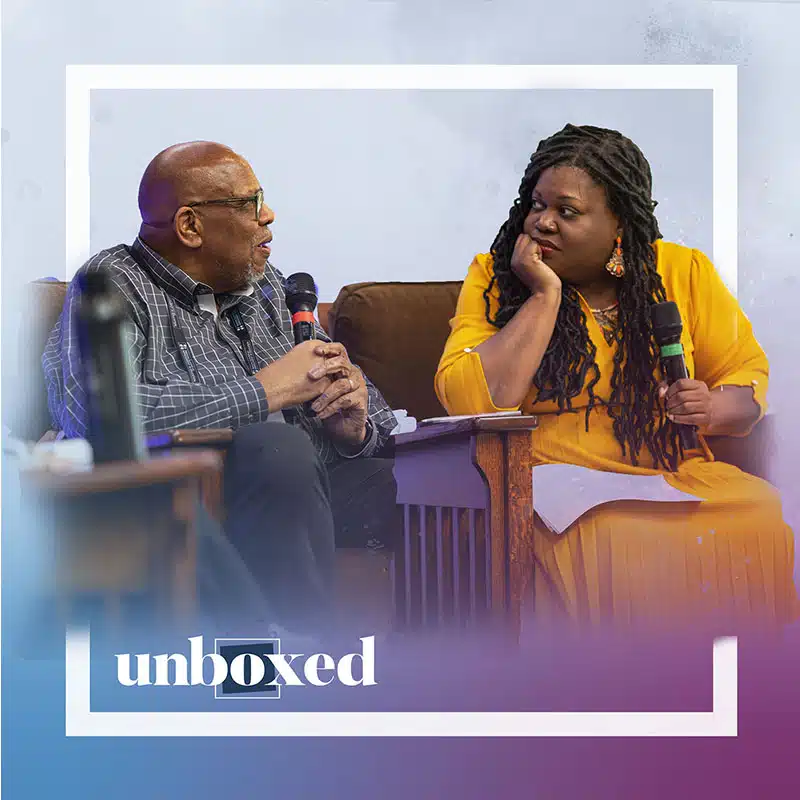
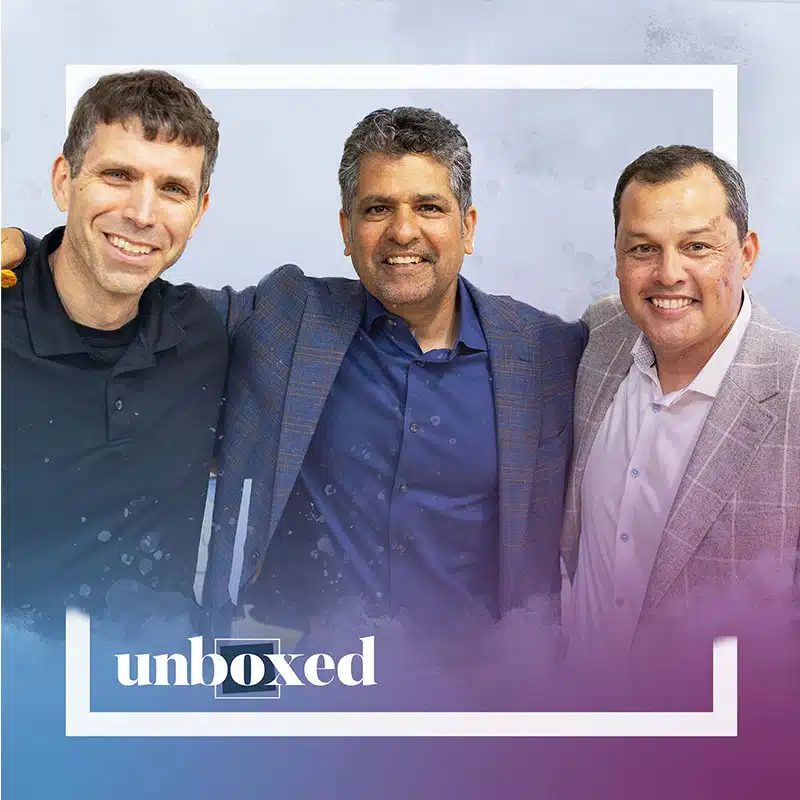
Thank you all so much. Thank you all so much. This is high tech, high unboxed. I’m Alec Patton, and we are coming to you live from the National Summit on improvement in education and the deeper learning conference in San Diego, California. The name of this session is deeper learning or continuous improvement. Why not both? So that’s what we’re going to be getting into. Here’s how it’s going to go. We’re all going to talk to each other for a bit, and then we will open it up to your questions. And now it is my great pleasure to introduce our panelists, Ben Daly started at High Tech High as a physics teacher in 2000 which makes him a founding teacher. He’s been a basketball coach, a school director, Chief Operating Officer and Chief Academic Officer for High Tech High and is now the president of the High Tech High Graduate School of Education. Give it up for Ben.
Next we have Jim May. Jim began his career as a high school social studies teacher and soccer coach in South Carolina. He was also a founding staff member at Two Rivers Public Charter School in Washington, DC in 2011 Jim joined New Tech Network as school development coach in 2022 he became co leader, and he is now the president and CEO of new tech network. Give it up for Jim.
Ash Vasudeva began his career as a science teacher at Pasadena High School. Since then, he’s been a senior program officer at the Bill and Melinda Gates Foundation, co executive director of Stanford University’s a school redesign network, Senior VP at the Carnegie Foundation for the Advancement of Teaching, President and CEO of connected, the National Center for college and career. And he is now the education program director at the William and Flora Hewlett Foundation. Let’s hear it for Ash
Now, if you’re listening closely, something you might have noticed is that all three of these gentlemen began their careers as high school teachers. So I want to start by taking you all back to your roots. Tell me about a moment that stayed with you, either as a moment when you saw deeper learning happening, or a moment when you realize the deeper learning was missing. Ben, let’s start with you.
Ben Daley 2:48
So I was thinking about the first moment that came to mind when Alec asked that question a couple hours ago was actually, I want to go back. So as an undergrad, I read Horace’s school by Ted sizer, and I always feel like, you can you tell you’re getting old when no one knows who your heroes are anymore. But for a few folks, Ted sizer was, you know, very meaningfully, meaningful for me personally. And so that kind of set me on a journey of thinking about like, well, what should high schools actually be about. And then I got became a teacher. I was coaching basketball. I was teaching AP Physics, and I was teaching a kind of regular physics class. And one thing that really struck me was, as a basketball coach, it was me and the kids preparing for the next we were together against the other team. And in my AP class, although I was not a big fan of AP as a construct, it was me and my students getting ready for the exam. We were like on the same side together, and it felt kind of like being a basketball coach. But then in my regular physics class, I was the one making the test at the end, and it was me against the kids. And there was this whole dynamic of like, well, what’s going to be on the test, Mr. Daly? And there’s, there was, like, this whole weird thing that was going over, kind of playing school together, because it was like a different dynamic than coaching or teaching AP. And so there was something there for me early on about, like, what’s going on here, and I think the work that we’re trying to do to have kids exhibit their work publicly. It’s like me and the kids getting ready for this event together. So that’s a that was something I thought
Alec Patton 4:30
about, awesome. And Jim, we’ll go over to you next.
Jim May 4:38
So the the first example that came to mind was, I didn’t get connected into this universe of ideas, probably until what you’re at. Alec mentioned around the founding of two rivers Public Charter School, which was in 2004 the second school I taught at was in Myrtle Beach, South Carolina. It was a school called Carolina forest High School. School in Myrtle Beach, South Carolina. I was the youngest teacher in the Social Studies faculty, and so I got the economics class that nobody wanted to teach for seniors. And one student in that class, over the course of the semester, we had this sort of slow, slow burn of a conversation taking shape about economics and economic ideas, where he would stay late and ask some questions about something we talked about, and the next, the next class we had, he would stay a little bit later still and had a few more questions. And this, this culminated in him, at one point in the semester, bringing me in a CD ROM. You heard Kwaku make a jerk earlier or joke earlier about, like, if you don’t know what a record is, he brought in a CD and which I popped into my computer, and he had, he had built a program that could calculate the genie index of any economy just with a few data points. The genie index, if you don’t know, is a measure of the distribution of wealth in an economy. Essentially, it’s a proxy for how big of an equity issue you have in an economic system. So this, this was a kid who this, by the way, was not the AP class. This was just literally the economic section that nobody wanted to teach, and this was a kid who was deeply immersed in becoming himself and understanding something he was interested in and working with really complex ideas through the process of learning. The term didn’t deeper learning didn’t exist at that time. That was 1998 but that was my first, I think, real interaction with watching, watching a young person engaged in that process.
Alec Patton 6:50
Did you stay in touch with that kid?
Jim May 6:52
I did for a while. I’ve lost touch with him. Now, got it?
Ash Vasudeva 6:58
First of all, thank you Alec for moderating the session. Thank you Ben for the invitation. Thank you Jim for the partnership in having this conversation. I, as you said at the beginning, at Alec, I taught science at Pasadena High School, and it was Chemistry, Biology and Environmental Science, and the two things that stick out to me most was starting a garden for the school where where all of our kids, whether they were in Biology and Environmental science in particular, could get connected to these principles in practice and see how things worked in real life. So when you’re thinking about the carbon cycle, it feels difficult and abstract, but when you take the carbon cycle and connect it to real world processes, what’s abstract and theoretical becomes practical and applied. And I think of most of school as a tension between those two things. And most of school is abstract and theoretical to most kids, and those kids will thrive in those environments, but without attention to the practical and applied, we’re going to lose kids. And I think deeper learning has a great connection to both.
Alec Patton 8:25
Thank you all so much. Now we’re talking about two, as you say, kind of abstract concepts, deeper learning and continuous improvement. So I asked about this when we were chatting earlier and Jim you you said you’d step up for this. What is deeper learning?
Jim May 8:48
Did I say that?
Alec Patton 8:49
Did say that? You did say that? Ben was there?
Jim May 8:54
Yeah, so deeper learning, I will pull, I’ll try to pull on two threads or ways of operationalizing deeper learning just to get a fuller picture. I think of what the people in this community are after, are reaching for when we talk about deeper learning. So there’s, of course, the education program from Hewlett that helped identify and articulate the deeper learning competencies which you see in your journals in which point at right skill and competency. They’re the outcomes piece. They come out of a thread that, quite frankly, is largely rooted in economic thinking, right about the 21st Century Skills movement and what you’re going to need to be viable in an emerging economy, or at least what we thought it was going to be at that time. But they also point at something larger, right, this idea of like agency and adaptability and people who are capable and relational right, point at a bigger picture of human flourishing than just economic success and. And then our friends, Zhao and Sarah, who are here this week, in their book, in search of deeper learning, talk about deeper learning, and in particular, powerful learning experiences right living at the intersection of mastery, identity and creativity. So they pull in for us, like the experience they give us, almost like a phenomenology of learning, of what it means to be immersed in becoming yourself, in discovering yourself through the process of learning. And so those two pieces together, I think, get us the richest picture of what we’re reaching for when we use the phrase deeper learning.
Alec Patton 10:44
Anyone, anyone have anything to add to that or,
Ben Daley 10:49
well, I was thinking about Billy. Billy came to high tech. High our first year we had 150/9 graders. Billy was one of those students. And Billy is not his real name, by the way, because there actually was a Billy. I’m thinking, as I said, that I’m different Billy, not
Alec Patton 11:06
Billy, to be clear, different, not Billy,
Ben Daley 11:09
just for those in the room who might remember the real Billy. Billy was 14 years old, and he was he’d been failing all his classes, and he’d been in a special day class, so a separate pull out classroom, because people felt he could not succeed in a traditional classroom. And in those days, you know your your cumulative file would get literally mailed to you months after the kid had enrolled in the school. So we didn’t even know that his background as he entered our school, and it would, this would have been our practice anyway, so we put him directly into the regular class with everybody else, and he immediately started succeeding. Freshman year, he built this chess playing robot, or at least, didn’t really play chess, but it was like this little arm that could move the chess pieces, so it kind of had the mechanical side. His senior year, he made this remote controlled toy for children. He went to Stanford, became an engineering degree. He went to work for this startup toy company, started his own business, and now he’s an engineer and a test pilot for this electric aviation company that partners with NASA. And I saw his older brother at Trader Joe’s a couple months ago, and I was asking him about how Billy was doing, and he said, Oh, High Tech High saved his life. Now, the thing about High Tech High is every single kid who comes to us was in a special day classroom, and then they all go to Stanford. So it’s, it’s really quite a remarkable institution.
Alec Patton 12:35
Since this is going to be a podcast, I just want to fact check that that is not true. I have
Ben Daley 12:43
a lot to say about that comment. And so, you know, at our best, though, this is what we’re really after, I think, is giving kids a chance to explore their passion, bring their passion, make something, build something, do something like Ash was talking about, and they just and kids can thrive in ways that you might not success. So that’s another version I would take of what deeper learning is about and what we’re after, all of us,
Ash Vasudeva 13:11
I want to just build on that Ben, because Billy, I think, personifies what parents communities, or teachers, leaders of all stripes aspire for children in their communities, and you see this trend in portraits of a graduate and graduate profiles when you paint that picture of what we’re trying to achieve as an aim for K 12 education, it isn’t reduced to an SAT score or a CT score. It isn’t reduced to the number of credits and the number of courses. It’s a much broader picture of young people ready to succeed in their civic life, in their professional life, their work life, of their family life, and other domains and the deeper learning skills are what get captured those competencies in those portraits of a graduate. So it is a destination, and people who are lucky enough like Billy to find their way into High Tech High and other great schools can get there, but we need to do more of it for more kids.
Alec Patton 14:28
Yeah, and thank you. And I’ll just add there’s a thing, the kind of a, I don’t know what you call it, like a workshop activity that I actually did for the first time when I was in facilitated by high tech, high teachers. But when I was living in England, the significant learning experience, and that’s, I don’t know if you people in this room have done this, but you are, you think about, you identify an experience, a moment of significant learning from your own life, from basically. When you were a K 12 student, when you were under 18, pretty much, but not necessarily, one that happened in school and you surface. Well, what were the things about that that that made that significant? And people usually understand pretty quickly. They can come up with and you could come up with for yourselves, if you haven’t done this, an experience of significant learning in your own life, and it often is something that different stuff comes up about you were really challenged. You were doing something that was meaningful, beyond yourself, that there were significant stakes, but they were and it pushed you, but it was achievable. You had an adult you had a powerful relationship with often being outdoors comes up and and often it’s something that didn’t happen in your core classes. Sometimes it is, but often it’s something that happened in an after school program, in a sport like, like we mentioned earlier. And so I think the there’s a kind of a there’s a lot of work that has been done and still to be done. About, well, what is deeper learning? What are the competencies? What are we really going for? But there’s also a level of like, you just get it, you know when it happened for you and you know when it wasn’t happening for you.
Ben Daley 16:12
I want to jump in on that, because having asked hundreds, if not 1000s, of people that question, I can tell you that no one person has ever said doing one through 19 odd.
Alec Patton 16:26
Think about that one just now the Yeah, Reverend, I assume we’re familiar with the experience of doing one for 19
Ben Daley 16:35
through 19, like when Alec explains my jokes for me. Thank you.
Alec Patton 16:39
That’s why, you know, I don’t want anyone to be left out. Yeah, over to Ben, for what is continuous improvement?
Ben Daley 16:48
I threw you up. I threw you off your game. There. Alec, okay, you know what is continuous like with what is deeper learning? This is like, like, a simple question that’s like, a perplexingly difficult question to answer. What I’m thinking about is these questions that the authors, Langley and colleagues, write about, which are these three improvement questions? Which is, what is your goal? And by what is your goal, we mean how much by when, a clear amount by a certain date. Don Berwick says, soon is not a number. Some is not a sum is not a number. Soon as not a time. So what is your goal? What are you going to change? And then how will you know that change is an improvement? And I really appreciate these questions so much, because they’re sort of like, no duh when you say them. And so in a way, it’s almost like, why do we need this continuous improvement thing? Because it’s so no duh. So I was thinking to myself, like, why do we need these questions and like, what’s, what’s the alternative to setting a goal and changing something and trying to figure out if the change was an improvement? So I want to tell the story about maybe 15 years ago, we were having a challenge. Maybe we’re still having this challenge. We were having a challenge, and we’re still having a challenge of math. And we had math teachers saying, I don’t know what math content I’m supposed to be teaching. And so we tried various strategies around this, and at 1.1 of our teachers said, I’m going to write a book. I’d like to write a math textbook over the summer for high tech, high for 10th grade. I said, that sounds amazing. I’ll pay you extra time to do this. And so she wrote this book, and then I’m in a meeting in March, and teachers are saying the same thing. They’re always saying, I don’t know what math I’m supposed to teach. It’s so confusing. Why don’t we have and I’m like, oh, like, what’s wrong with us? Why don’t they wait? We wrote a whole textbook. What about there’s a textbook I never heard about this textbook. I’m like, gosh, I’m such a moron. We made a textbook. We didn’t even tell any of the teachers. And I’m like, Oh, I’m really sorry. We do have this textbook. And then after the meeting ended, I was like, Wait a second, I look back at my calendar, and in fact, we had met in August, we had shared the textbook, we had done stuff together, and yet no one even knew, even remembered, in March that we had done this. And so Joe Buchanan at the billions Institute has this expression, it’s not a website. And what he means is he works with people who are trying to affect change, and they think, I’m going to make a website or I’m going to make a book, I’m going to make a textbook. And and Joe says the problem is people spend 99% of their energy on making the website or making the textbook or making the resource, and 1% thinking about, well, who’s going to use this? How are they going to use it? Etc, etc. And I think I was 100% guilty when he said that, I was like, Oh my gosh. I saw, like, my professional life, like flashing through my eyes, thinking of the websites we’d made, the project repositories we’d made, the books we’d written that were supposed to show somebody what to do. And when I share this story, someone, and one of them is in the room right now, I won’t look at him. Always says, Ben, we still need websites. So to be clear, I’m not saying we shouldn’t make websites, but it’s like, that’s just like 1% of your energy is the website, and 99% has to be on. How are you doing it? And for me, when you think about improvement. What’s your clear goal? How much by when? And then how are you going to know the changes in improvement that, to me, is getting at break out of this, make a resource, and then magically, something will happen, and people will know what to do with it. But like, what would it actually take to make that resource actually useful for people? So that’s, for me, what continuous improvement
Ash Vasudeva 20:19
is about. I let me add a little bit that’s a great description Ben and I think the website approach is a great example of the technical definition of how you might approach continuous improvement. But you’re really talking about a relational, cultural and a social component to this that sometimes gets missed. And I remember distinctly being at the University of Central Florida who had done an amazing job moving the retention rates of the students who had were not from college, going families. And I talked to the provost like, what was going on to be such an outlier in your institution, and he pointed me to an example, much like you pointed an example Ben, which was to a parking lot attendant. They found that kids were getting ticketed at the University of Central Florida, the tickets were then collecting and adding up, and you could no longer enroll for courses. So kids who otherwise would have stayed in the school were leaving the school because they had parking tickets. And the provost, and I’m sure many others sort of worked with the parking division, and the parking division reasonably understood that their job was to, you know, police the vehicles and parking and raise revenue through those mechanisms. In my
Alec Patton 21:59
experience, literally nobody has more effective parking enforcement than universities.
Ash Vasudeva 22:04
It’s probably true, and that what the Provost said was, you know, actually, our job and yours and all of ours is to help kids succeed at this institution, and you play a key role in that. And so if there are ways we can help young people avoid the ticket, start with a warning, sort of figure out how to prevent the problem in the first place, we can all play a role in helping young people graduate from here. So he reframed the organization and the goals in a very personal way, and put everyone connected to a larger mission, which I think is part of continuous improvement.
Jim May 22:46
And if I can pick that up just I think that starts to get at the specific question around how improvement benefits deeper learning. I think you know what I take from the two stories that been in ash told is like you, you need a method for constructing shared meaning. And shared meaning can’t be even, even if it’s coming from a set of values and ideas that I believe in deeply, like deeper learning, shared meaning can’t be a highly defined set of normative practices that I hand down as the formal leader of the organization, like shared meaning has to be cultivated communally over time, and continuous improvement gives you a set of tools to do that right, whether it is a fishbone diagram or a driver diagram, or a PDSA cycle or a run chart. It gives you a set of tools, and those tools are not a substitute for judgment, but what they do is they create the conditions within which collective wisdom can emerge. And so you you still need that method, and that happens through right? It happens through experimentation and risk and reflection and renewal and continuous improvement. Gives you a set of tools to do that at the end of the day, organizations, whether you’re talking about universities or K 12 schools or, quite frankly, any organization, right, great schools and great organizations aren’t a function of individual brilliance. They’re a function of what we hold in common, and that set of tools gives us a path through which sort of individual experimentation and observation and intuition can travel towards shared meaning, shared purpose and collective action.
Alec Patton 24:49
Awesome. Thank you so much.
Ben Daley 24:52
Now I want to know I want to pick up. I want to wait up on this.
Alec Patton 24:57
Oh, please, Ben, go ahead.
Ben Daley 24:59
I was had. Lost my thought, and I’m back.
Alec Patton 25:02
It’s, you know, in this non hierarchical situation that we’re talking about. Here he is, my boss.
Ben Daley 25:08
Sorry, Alec, you know, Edward Deming, the improvement guru, you know, famously said he got mad, he was talking to educators and got frustrated. And he said, these educators, they have miracle goals and no methods. And so this idea of having a method for how to improve, I mean, when I heard that, I just felt like when I read that Deming said that, I thought, Oh, I’m one of these educators who’s got miracle goals. I want to have deeper learning outcomes. But what’s my method to get at this? I was thinking about my colleague Adria Steinberg, and she has this joke that when you’re writing a grant, you the first part of the grant is you say this thing you’re going to do is small scale, and then the end of the grant you say, and after that, we’ll roll it out. And the joke is, by the time you get to the rolling it out phase the grant, the funder will have moved on to a new strategy, so you can just kind of move on with them. But I was thinking about how that has that roll it out. Kind of vibe is a method. That’s the method I had. So I was thinking about we had, we had this software program called Alec that was helps kids with math, and so we had it in two classrooms, happening in the ninth grade, and then we’re like, I don’t know, what do you think? Yeah, that seemed pretty good. So then we rolled it out to the rest of the organization. Guess what? It did not work very well. This was, like, a terrible management strategy. So you’re like, Why do you have these terrible strategies? Like, I don’t know. I was teaching, and then I was a principal, and then I was an assistant superintendent. No one I have a doctor in Educational Leadership. No one helped me. Like, think about, how would you roll it out in some way that would actually work and improve the improvement we’re actually getting some methods. Oh, let’s get it working in one place. Well, now let’s get it working in one place more than once. That’s actually a different challenge. Well, now let’s get it working in two places. How about four places, two at this school, two at another school. Because that’s actually a different challenge getting it to another school. Now let’s get it in 16 places at four different schools, and having some discipline to how you roll it out. I think there’s something very key there that I have really appreciated from improvement methodology.
Alec Patton 27:08
You’re anticipating the next question, which is pretty good. Alec, yeah, you it’s almost like we prep for this. Were you a deeper learning person first, or a continuous improvement person first. And was there a kind of conversion moment for you that’s over to you?
Ben Daley 27:28
Ben, yeah, so I read Ted sizer when I was 19. That’s where I although deeper learning was not a was not an idea at that time, or that was not a phrase, at least that idea of going deep, and, you know, deeper over shallow. That’s where I was exposed to those ideas. I remember being 19 and reading Horace’s school, and I could only read a couple pages because I got so excited by what was I like, put the book down and just like, think about it took me forever to read that book because I was just like, slowly reading a few pages and getting excited. This is makes so much sense. This would be so great if school was like this and I was someone who’s good at school. I went to school, they gave us lectures, took a test on Friday, I could remember what the teacher said, so I got good grades, but I also noticed it was not really working for most kids, and so that’s probably why Horace’s school spoke to me so much, so deeper learning for me came first. And then, you know, we had 200 kids, 12 teachers here at high tech, high and then we grew to full school, and then several schools. And when I started, and I was this was all in the No Child Left Behind, era where we were going to improve by shaming people, by posting test scores in the newspaper, which is a wonderful change strategy. I can’t say anything that wrong would happen with that plan. And so I was so mad about using data as a way to improve schools. And the time we’re using norm reference tests, we’re all going to raise scores on norm reference tests, which, if you know what a norm reference test is, it’s like normed. It’s actually impossible, on average, to improve the score, literally in the way that this actually works. So I guess it’s so angry about so I was just like, oh, data is ridiculous. Education doesn’t make any sense at all. And then I started reading because of Tony brick and Carnegie Foundation colleagues. Started reading in healthcare. How do you get hundreds of 1000s of healthcare professionals to change their behavior? Well, actually, there’s these methods. And because I have no opinion about how to help doctors know to wash their hands thoroughly before they go into surgery, I could kind of hear it in a way that I could not in other contexts. And then I’m like, thinking to myself, I have a degree in physics. I’m not, like, opposed to data. I was just so mad about raising norm reference test scores and publishing in the newspaper, and this is our big change idea, that I started saying, Oh, this improvement thing could work for me. And meanwhile, here we are. Now. We have five schools, we have seven schools, we have nine schools. We have we’re not a huge district, but we are a large. Your system, and we’re not 12 teachers sitting around a conference room table anymore. We’re a larger organization. We need to kind of act differently, but we’re still trying to operate in this like folksy, homespun way of 20 of us in a room, but it’s not 20 of us in a room anymore, and we’re going to need some more sophisticated methods. So for me, that was what really helped me see the power of improvement and try to think about how we could make use of it in our organization.
Alec Patton 30:25
Jim and Alec, what about you guys?
Jim May 30:31
Definitely deeper learning, first in terms of like an orientation or an introduction to a powerful set of ideas beyond the sort of generic version you get in your undergraduate program, right, in a teacher training program, right, that had a sharp point of view that said, you know, Ben referenced Edward Deming, right? Like deeper learning is similar to continuous improvement in that these aren’t new ideas. How we articulate and operationalize them have certainly adapted to the realities and the context over time, but, but these aren’t new ideas. And so I mentioned the tour of British public charter school earlier. You know we had, I was just really lucky to be surrounded by an incredible group of colleagues, and that place was a real gift in my life and my journey. And while we were nowhere near the sophistication of the tools that we’re talking about that make up the suite of tools that’s inside of continuous improvement, there was, there was a culture there about making sense of data together, about reading together, about trying something new, trying to intertwine both praxis and things that you’ve read together, and then interrogating what happened afterwards so well when we were Nowhere near, you know, a run chart or anything nearly that sophisticated, right? I had at the same time that I was having an experience with deeper learning, again, that term wasn’t around yet I was I was having an experience with the way in which an orientation around data and making sense of data actually enhanced our resilience as an organization and as a culture.
Ash Vasudeva 32:31
I want to pick up on these two things, because there is a thread that connects Ben and Jim and me, beyond our data teaching career stories, there is a thread even over and above that. And it’s, it’s we all taught in schools that were aspirational and deeper learning, sort of the orientation in a pre accountability and pre continuous improvement environment and and so we saw a destination that was really worthy of working towards, and we, I think we all felt a relational core of schooling, whether it was how teachers and students work together, or students and students, or teachers and teachers, and all of that was fighting against a system that was not designed for it. So when continuous improvement sort of came to be, it was a bit of a lightning bolt, because I remember, I was at the school redesign network at Stanford, and we were trying to support small schools across the country and study them, and a business school professor there named Huggy Rao had just produced a case on IHI. And the case, which many of you know and have read many other things, showed how a large, often public bureaucracy like the healthcare system, can make dramatic gains, and there was a way of doing it. And I remember sitting with Huggy and the head of faculty, head of SRN at the time, Leonard darling, Hammond and myself, saying, How can we do more of this in education? And I think it it was really trying to figure out the methods, as you’ve said, of continuous improvement, attached to the aspirational destination of continued of deeper learning. It’s a actually a very powerful marriage that I think can can sits here at this conference in a very special way,
Ben Daley 34:42
we should bring these two conferences together.
Alec Patton 34:47
All right, on, on that note, Ben, why? I think we’ve sort of, we’ve touched on this, but let’s get right into it. Why does deeper learning need? Continuous improvement.
If you say, read my article, that’s unacceptable.
Ben Daley 35:13
So I know I have so many different stories I’m thinking of so we had a student, Camilla, not her name, at High Tech High Chula Vista, and she was Latina, first gen from a low income family, got good grades, and she was another High Tech High success story. She got into a Cal State University, going directly to a four year school, first in her family to go to four year college. And over the summer, she got a letter from the school saying, Hey, you took the wrong math course in your senior year. So it’s no problem. Just come this summer and take a certain course, they’ll get you back on track. It’s $2,000 and what I wish had happened is she’d come to the school and said, What’s this weird letter I got? And then we would say, Wait, that you didn’t. You know, we could have sorted it out, but she didn’t. And so she thought to herself, well, I don’t have $2,000 that’s okay. I’ll just go to community college, do my general education courses, and I can transfer two years later. And what she didn’t know is that her odds of graduating from a four year school just got cut by a factor of six, because starting in remedial math courses at a community college is just the data shows something like 10% of students are ever going to even pass a math a college level math class, let alone get an associate’s degree, let alone transfer to a four year let alone end up graduating from a four year college. So the data is really stark, and the thing is, she didn’t take the wrong math course senior year in high school. There was a mix up between what we had written in our transcript and how the admissions office had interpreted that transcript. And when I heard about this in the fall, it was like, so devastating. Here we are. We’ve got this school. We’re trying to do things differently, where the kids are building robots and they’re making documentary films and they’re trying to do authentic assessment. It’s like, this rich work. It’s like your whole career can be on just trying to figure out how to do this well. And yet, at the end of the day, we just the way we labeled that the course on the transcript. I would like to blame the college more than us, but nonetheless, somewhere between us, there was a mix up, and it’s like, what are we doing here? We’re putting all this energy into trying to enact deeper learning, and if we don’t pay attention to the stupid thing about what’s the course name, it’s like we’ve we’re undermining everything we’re doing. And so for me, for all of us who are working in schools, or we’re trying to have more deeper learning experiences when we’re kids more often, I think we have to attend to Camilla and her transcript. And what are the little details like? And there’s like, 100 example, a million examples of these little things that are getting in the way. And to me, continuous improvement can really help us see the problem, see the system, dig deep, get into it, and then figure out what to do. So that’s one that’s one reason I would give.
Ash Vasudeva 38:18
I think there, there’s an window of an opportunity that’s open now that can create great things by bringing continuous improvement together with deeper learning. I mentioned the state and district interest in these portraits of a graduate that sort of, at least at a high level, put deeper learning front and center in in in where we would like to develop young people. So, so that’s there. There’s also movement to rethink the Carnegie unit. The Carnegie Foundation is trying to say, is our minutes really the coin of the realm in education? How do we make school more than an accumulation of minutes. How can we unlock the potential of schools in ways we haven’t before the Fremont High School principal who talked about the great gains at her high school and who’s led those gains, that school was organized in a way that tried to change the student’s learning experience. So we talked, Rydell mentioned whether you’re student centered versus what’s the student learning experience. Well, at Fremont, they opened up the aperture of schooling. So it wasn’t just changing the school, it was connecting the school to the broader community, media academies, Law and Justice Academy, architecture and engineering. It was giving kids a set of learning experiences that could actually develop the deeper learning skills that have alluded us to date. Yeah, so there are a set of rich opportunities that are happening now, and there’s a big push, whether it’s career connected learning in the way that Fremont High School represents, or civic based learning and groups that are trying to give kids opportunities to work with local government, to work with community based organizations a chance to sort of change the design of schooling in a fundamental way. Now that movement, I think it, has a much greater likelihood of success if we can connect it to a method like continuous improvement that can keep an eye on an aim, build processes and social agreements about, how are we making progress towards that aim and and hopefully move the needle in a way that actually transforms the school system that, As we know, has been remarkably resistant to change.
Jim May 41:04
Pick up Ash’s last comment, but go in the opposite direction of why improvement benefits from deeper learning.
Alec Patton 41:12
That was my next question for you. Jim.
Jim May 41:22
My wife is a physician. Specifically, she’s a cardiologist. It is not uncommon, right, for her to see a patient that whatever is struggling with high blood pressure or is a heart condition of some sort, and the request is, you know, what’s the treatment? What’s the pill, what’s the surgery, what’s the what’s the thing? And obviously, particularly in healthcare, there’s an importance to that, right? There’s a there’s a need for that. And in a story that I am guessing all of you have heard before, there are essentially, sort of two responses that happen there, right? There’s you get the statin right that helps improve your blood pressure, and then you go back to smoking and drinking and right having right steak for three meals a day, right? And then there is the version of that story where a person actually make some really systematic changes about their lifestyle, right? And their diet, their exercise, how they manage stress, so on and so forth. So if you think about that example through the lens of organizational learning and the idea of complex adaptive systems, right, the first example, where you take the pill and then you go back to doing whatever you were doing before, is what we would talk about as first order learning, right? There’s multiple names for it, but in simple terms, it’s what we would talk about as first order learning. First Order learning like that there. There are different types of first order learning, but the fundamental thing all those types have in common is that they leave the prevailing system intact. One of the both deeper learning and continuous improvement have an orientation to transformation, but it’s a different orientation. In deeper learning, the need for transformation is an assumption that we argue from not to in continuous improvement. It’s an assumption that you argue to not from right. If we can increment improvement and enough of the systems and enough of the surrounding pieces, eventually, what will happen is a transformed system. Right? Deeper learning starts with the argument that says, Hey, you want these outcomes. You want these sort of relational, adaptable outcomes. Guess what? Our system is fundamentally not designed to consistently produce those outcomes at scale for young people. This has to be about transformation from the start. The challenge with improvement in a system that’s not pointed towards transformation is that improvement actually reduces dissonance, right? It is. It is, by analogy, like turning down the heat on a pot of water, right? You don’t get the transformation in water to gas unless the heat stays high. That’s the only way it can release the heat. So improvement, if you’re operating within a system that’s not talking, that’s not explicitly having a conversation about the need for transformation, improvement actually reduces the felt pressure to pursue transformation. So there’s a way in which improvement absent a paradigm like deeper learning, I wouldn’t say it’s the only one that could do that, but absent a paradigm like deeper learning actually reifies the prevailing system.
Ben Daley 44:57
There’s a danger of. We have, I think I’m just repeating what you’re saying, but there’s a danger. We have a system the way it is, and if we make it marginally better, consistently and at scale, it’s still marginally better.
Jim May 45:10
It’s validation that there’s nothing wrong with that system.
Ash Vasudeva 45:12
Do I one more thing. I’m not going to preach at you right now, but I’m going to say just one more thing, Jim. I think that’s a great, great point and and it’s if continuous improvement doesn’t bring in some of the deeper learning, beliefs, ideals, goals, then it will undershoot the mark of possibility and opportunity and and, and actually, the transformation agenda, as you said, is is shared but, but without one another, it’s going to be hard To get to a dramatically better place. And, you know, at Hewlett, there’s always this push and pull between, you know, we introduced at least the terminology of deeper learning in 2010 ish, and have been supporting those efforts ever since. But there’s always a question mark about whether or not, what is the evidence that deeper learning is actually happening and and and kids are actually learning. And our evidence base, you know, without, you know, from NCLB into Esser is, is largely been literacy and math scores. So there’s always this tension of, are you getting at the big things that you care about in deeper learning and then, but are you actually moving the needle on these things that most everyone sort of recognizes? And you have to do both. You can’t leave one behind. You can’t leave fundamental measures of knowledge, if with an orientation to skills. So so the the continuous improvement approach brings a measurement dimension which is critical for success, I think. And so it’s both existing measures, but finding measures that are more meaningful to students, to families, to local communities. One of the biggest pushes for the deeper learning competencies have come from the business community, if you they’re now called durable skills, and it’s what employers are asking for. Colleges are referencing the deeper learning skills. So if continuous improvement can help us think about a measurement approach which can demonstrate growth in ways that are legible and credible to outside audiences, the two can really move the needle together in a way that either one alone wouldn’t do.
Alec Patton 48:04
All right, we’re now going to know, we’re now going to open this up to questions from the audience. So I’m going to come out, I’m going to come down, and if you got a question, come and ask. Raise your hand. Start.
Claire 48:26
Kia ora, I’m Claire out here from Auckland, New Zealand. We have a real focus on spirals of inquiry and teaching as inquiry as a mechanism for both embedding deeper learning and focusing on continuous improvement. One of the things I’m really passionate about is the publishing and sharing of learning and creating those learning ecosystems amongst educators. What is your view around the importance of being public facing with your learnings? If you are focusing on deeper learning and you are focusing on continuous improvement,
Jim May 49:08
I will start, I will just say, I think this is an orientation that both both approaches share right in the deeper learning community, and it is, you know, beautifully visible as we as we navigate this space, right, there’s a very real commitment to public work, the public exhibition of student work, the public critique of that work, all those things. And the same thing is true in in the improvement community, right, that all of those tools that we were talking about are a way of making thinking and deliberation public and visible so that we can talk about it together as a community, and again, arrive at some sense of shared meaning and purpose together as we interrogate those things educator the public facing nature of education and breaking the rules. Yeah, the importance of actually educators being vulnerable and sharing their learning and failures as well.
Ben Daley 50:06
Yeah, 100% I think, trying to think of a good example. I mean, yes, we have an idea at High Tech High that we call symmetry, which is to say that the pedagogy that we use with the kids should match the pedagogy that we use with the adults, which is, like, so obvious when you say it, except for I keep thinking about this two and a half day workshop I went to with a colleague about differentiation, where they lectured at us for 20 hours and they said the famous, well, if we had more time, we would we were going to model this, but instead, we’ll just tell you about it and like, how often do we do that? So having kids make their work public but having adults make their work public key.
Sarah Howard 50:53
Hi. My name is Sarah Howard. I’m from Chicago, one of the I’m a fan of deeper learning, and I think operationalizing it broadly at scale is really challenging. It requires some flexibility in the learning outcomes we’re shooting for that either we don’t think black students are worthy of or deserving of, we need to keep them under control, or we make it so flexible that bias seeps in and what we think black young people are capable of we Like way lower the bar. So how do we make this something that isn’t just, you know, specialized for the kids parents who can advocate for it.
Ash Vasudeva 51:52
It’s a great question. Sarah and I was two weeks ago at the North Kansas City Public Schools serves about 20,000 students in the Kansas City area. Very diverse, demographically white, black, English language learners, whole group of folks, and I was sort of sensitive to this going in. I wanted to see well, how are they ensuring that all students have equal opportunity in their what they had was college and career academies, and I was very happy to see how much attention they gave to to ensuring a balance in their academies, to ensuring that some soup groups weren’t out of those experiences, but were distributed across. What they had was a business, leadership and entrepreneurship, health and wellness, public service, that this was an issue that was directly on their minds, not something they were sweeping under the rug. And I was really proud of that, and I feel like that needs to be part of the public discourse as well. Back to the first question that we can have open conversations that we may not have had when tracking was a more accepted set of policies.
Jim May 53:34
I’ll just say I don’t. I don’t have any tidy like mystical answer to what is a really difficult question. What I will say is, I think an abiding conviction of the deeper learning community is that, is that people, adults and young people, develop in response to their environments, right? And we have to be incredibly intentional about who, who we extend the invitation to this type of environment, a place like High Tech High here, and often, you know, at the deeper learning conference, or many of the organizations reflected in the audience here, if you attend one of those conferences, right? They have students presenting project based work of one sort or another. And one of the really common reactions to seeing student presentations, if you saw the fifth graders speak this morning at the deeper learning kick or this afternoon at the deeper learning kick off. One of the really common reactions is like, Oh, wow. Like, what an exceptional what an exceptional young woman. The whole point is they are not exceptional. The literally, the whole point of putting a kid on stage is that all kids, when it extended this invitation to this environment, consistently and rigorously, day by day, year after year, will respond and develop in powerful ways that are predictable. That is hard work. So I don’t have a here’s, here’s the three step that is hard work, but it’s not mystical work, right? It’s about the assumption of brilliance, making sure we extend the invitation to everybody and taking up the work every single day. So
Alec Patton 55:12
if I can just real quick break all the rules and also give a response, as well as moderating, I think I share all those concerns about deeper learning. I don’t share them more than I feel them about business as usual. I don’t, I don’t think that the current situation is going to serve underserved students better than trying to do deeper learning at scale.
Aaron Anthony 55:38
Hi there. Aaron Anthony, at the University of Pittsburgh, Institute for Learning, we’ve heard a lot about how deeper learning and continuous improvement are just mutually synergistic. This virtuous cycle. The title of the session, though, suggests they might be in conflict. It’s dichotomous. Are there instances where both are present? We’ve heard where one is absent is a warning. Are there instances where both are present, where they are at tension, and what does that look like?
Ben Daley 56:11
It’s a good push, and I appreciate you holding us to account to the title of our session. I I mean, I think the measurement question is a place where I personally feel it as a tension, because a lot of times the I mean, I want to say a bunch of things that are all in conflict with each other, but if we want kids to collaborate, well, communicate their ideas, think critically, and then our primary measures are multiple choice standardized tests, we have an obvious problem. And so I think there’s work to be done. And so therefore there’s so, like I was saying I was so skeptical of data in education because of this kind of narrow view about measurement. And yet I feel like, then we’re like, oh, well, it’s hard to measure deeper learning, so therefore measurements bullshit. And sorry, Alec and and I feel like that’s like an ALEC, that’s an insufficient response on our part, like, how? Because I think there are ways we can try to get at measurement of things that we do care about. And if we do that, then I think it becomes much easier to apply the tools of continuous improvement. So I experienced that as a tension of, what are we already measuring? It’s easy to get to work on improving. It’s not easy, but it’s easier to get to work on improving those things. And I think we need to have more sophisticated ways that we’re measuring things that we really care about, so that we can also likewise work at it, because otherwise it’s very I don’t really know how we’re going to improve across schools, across districts, across states, if we don’t apply some of these improvement methods. So I’m not sure if I’m answering your question, but that’s what I thought about.
Ash Vasudeva 58:06
I think, first of all, I appreciate putting the conflict on the table. I think measurement is a classic one, and Hewlett sponsored a portfolio of work called hard to measure skills, right that we’re just trying to get at the deeper learning. And I don’t think we’re going to convince too many people that the hard to measure skills were more important than literacy and math scores. There’s just that. Again, there’s a tension there, and both are important. Both need to move. You don’t want one without the other. I don’t think anyone would want that. But there’s one more thing that I think is important to raise about conflict, and it’s about cultural identity. And how do you identify? I think people who identify as committed to deeper learning might not see themselves in the continuous improvement camp and vice versa. When, when I think it’s more of a both and than an either or. But let me give you example when, when I was at the Carnegie Foundation for Advancement of Teaching, we were trying to promote continuous improvement, improvement science, those that way of thinking. And we went to sort of the largest association of teacher educators. And there, I think they were very kind and respectful about the ideas, but the message was, Well, I think continuous improvement is great, but I’m about action research, that’s what I do, and not being able to see the synergies or the sort of overlaps and convergence, and what can we draw from different disciplines to get to a better place. I think that’s hard. So how do we sort of break down some of the cultural barriers or identity issues?
Peter Harris 59:50
Hi Peter Harris from Ulster BOCES in New York. You guys have talked about Career Academy models and durable skills, and so I’m curious also. For your response when we look at durable skills and understanding who wants them, who needs them, and why and how they’re a part of economic development, workforce development as well as human development, how should we be learning into or leading into community groups and industry partners and employers to find out what these durable skills are and how they think we ought to be helping people to develop them.
Ash Vasudeva 1:00:35
Well, I think that when we talk about the durable skills, there’s a dotted line back to the deeper learning competencies. They overlap quite a bit and been named, you know, the sort of the classics, the communication, collaboration, critical thinking, problem solving, learning, how to learn, and the reference that I spoke of, and you mentioned to career academies, were really our efforts to create learning experiences that are capable of allowing those skills to be developed beyond schools and classrooms, and that can happen in communities and community based settings, in career based settings as well. And there are organizations America succeeds is a big one that focuses on naming the durable skills, articulating how they get developed, and promoting measures to get at that. So I think what community or civic learning and career learning does is try to move a set of richer learning experiences from the margin to more of the mainstream. And again, you guys mentioned John, Matt and Sarah finds book. And you know the I think one of the big points that have stuck with me was that, where were kids getting these deeper learning opportunities? They were getting them in extracurriculars. They were getting them in electives. But whether you were in a sort of a rigorous no excuses School, an International Baccalaureate school, a comprehensive high school, your academic core there was largely bereft of those, those skills. So, so how are we going to, kind of, you know, help both create new environments in schools, but leverage the community based learning settings to build them? I think that’s one of the pushes.
Stacey Caillier 1:03:00
I really appreciate that last example, Ash, because I think it gets at how we’re not just about incrementalism. And I think the question I have for you guys is a lot of times when attention that I experience being a camp, somebody who’s a camp, part of both camps is when we talk about deeper learning, we talk about transformation too often. I think when we talk about continuous improvement, we talk about incrementalism. And I think we confuse small steps and small ideas with testing old ideas on a small scale so you can not burn a lot of will before spreading something that doesn’t work. And I’m curious what you all would say about how we can, kind of, how can deeper learning provide a path for us to really embrace CI as transformation, not incrementalism, because I think that is helping or is hurting us. As people who believe in continuous improvement, too.
Jim May 1:04:06
I mean, I’ll just pick up with the comment I was making earlier. I mean, I think this is one of the things that deeper learning offers. Continuous Improvement is a way to front load the commentary about transformation, to say this is the end game, right? So that, so that it doesn’t get confused with incrementalism. Because, right? This is a room filled with people who are deeply immersed in these two sets of ideas. So if you talk to people in this room, this is, this is not a tension for most of the people in this room. It is a tension when you walk into a random school somewhere in this country and are watching how these ideas get operationalized. Okay? And so I think you know, deeper learning can provide a way of talking about that end destination that necessitates that right, a starting assumption of the need for transformation in a way that’s really a. Important that doesn’t allow us to either dismiss incrementalism or to use or to misinterpret incrementalism as validation of what we were doing before.
Ash Vasudeva 1:05:15
Stacey, I’m glad you raised it. I think CI gets a knock. The incrementalism is a critique of continuous improvement. And Jim, I think your idea that you’re you’re actually creating a bigger frame to push up against or push forward towards, is exactly right. But what, what I would add to that is that the continuous improvement work that has transformed school systems. Sarah Howard’s group is one of them. When, when you move high school graduation rates from 5060, 70% in many systems to closer to 8090, towards 100% you are transforming lives. You are transforming communities in in ways that are remarkable. I think the next chapter of the work, the ambition, has to be around deeper learning, because we’ve we’ve gotten what we can out of the systems that we have, and trying to push forward is the right way to go, or we’re all going to be in a lot of trouble. I think so. I think you keep pushing on on those that connection, as someone who lives in both camps.
Nimisha 1:06:35
Hi, Nimisha Ganesh from San Francisco at MGT, my question is, I’m curious how you’re thinking about AI, and specifically the urgency of now in terms of both maybe the potential that it presents, but also the risks in terms of calcifying the system, as is, I think, a lot about democracy and what you know, and sort of what is the sort of Role of the education sector in helping shape the agenda of what we want students, learners, citizens, to be able to do and thrive. And how are you seeing kind of AI career connected learning, kind of high school transformation, sort of relating to each other in this moment,
Ben Daley 1:07:17
there’s so much there. I helped start High Tech High and I’m skeptical of technology and education, so I know that’s a little paradox. I get very annoyed when I hear people talking about making this AI bot that’s going to replace all the teachers. And I just feel like, have you met kids like you think that’s going to work? And yet that’s my cranky side. Because also, I mean, I’ve been playing around with Claude The last week and a half, and, like, making things that are helping make my life easier and better. And I’m like, I’m pretty sure I should keep doing that, and I’m pretty sure kids should learn how to do that too. So there’s a, there’s a for me, an unresolved conflict in that. But I will also just add that it’s not lost on any of us. How many Silicon Valley billionaires send their kids to schools that have no computers? So there’s there’s something. There’s an unresolved conflict around all of this.
Jim May 1:08:17
My organization also has tech in the name this has been an endless source of conversation for Ben and I, over the year, many years of our friendship,
Ben Daley 1:08:26
no one knows the difference between New Tech and that’s right, that’s awesome.
Jim May 1:08:33
I will say, you know, if it when New Tech Network began, it began the conversation about technology was not, how do we use technology to do what we’re already doing more efficiently? It was a conversation about an economy that was changing in one community, and a recognition that technology was going to be one of the critical tool and skill sets that young people needed to have as a tool for meaning, making as a tool for communication is a tool for making sense of the world. And so how do we get those tools in the hands of young people early on in their developmental trajectory? And so to the to the point about the calcification of the system, I think that’s all. We have pretty well worn patterns about how we interact with technological innovation. And the first instinct is to say, how can this make all the stuff I’m already doing much, much easier? And the challenge for us is to say, how does this change what we ought to be doing? How do these how does what technology is doing now shift the way we think about the type of young people we’re trying to cultivate in our schools and how we spend our time? You know? I think, I think this is a never ending thread. You know, we early on our work, we helped schools figure out how to implement. One to one computer environments. Now we’re having a conversation about AI, and again, the challenge is, how do they see that technology more through the lens of a readiness issue for young people who will have to make sense of the world through the prism of technology and emerging technologies, and there will be something else we’re talking about in five years when we sit on this stage again.
Ash Vasudeva 1:10:26
Just a quick addition. I think that’s a it is. There’s a lot in that question. It’s a very important question. Appreciate you raising it. Coming out of the pandemic at a Carnegie Well, it was an improvement conference that Carnegie hosted, we had about 20 superintendents in the room, and and we’re returning to school, and we were building the national network around improving the return to school and recovery. And across the board, among those 20 superintendents across the nation, one question came up is the mode of instruction had seemed to have flipped to open up the computer, open up your laptop and do the work on the laptop. All of a sudden, the value proposition of being in school begins to plummet. And I don’t think we you know, the chronic absenteeism problem we saw is unrelated. So. So what I think I took away from that moment was, unless there’s a relational core to what you’re doing, unless there’s a chance to build relationships, strong relationships, inside of schools that are meaningful to young people have a sense of belonging and connectedness to their school and their larger community, we’re going to be going in the wrong direction. And if AI can be useful in, and I hope it will be in sort of helping us manage counselor loads, which are atrocious, even student teacher contacts, which are, you know, huge in high schools. How can we take away some of that burden and allow the human connection to be the centerpiece of our schools. That’s my hope for AI. I don’t know if we’ll get there, but we’re going to try.
Derek Mitchell 1:12:15
Hi, I wanted to offer a different take on incrementalism for my sister Stacy there, because incrementalism in the presence of continuous improvement, in my mind, is just a transformation on the way, right? And if you think of the story you told about the student who you inadvertently put into the mainstream classroom, no one would have called that a transformational change, right? But the impact of that was purely transformational. And so to me, in the presence of a system that’s rigorously structured to to learn its way forward, an incremental improvement is really what you’re looking for you want to, you want to stack those MFS until you reach a point where they have transformational impact. And if you don’t have it, if you don’t have those incremental changes, what are you doing? Right? You’re essentially doing cycles for no end, right? Because transformation is not going to happen on the overnight. It’s not going to drop on you. Drop on you like a rock from space. It’s going to be the result of long, rigorous, incremental work. And we need the muscle to maintain it over time. And that’s the thing we’ve lacked for a lot of our history in this field, that the muscle to see something through, and that’s why our teachers are so reform resistant, because when they say they’ve seen this before, they have seen this before, and we just didn’t stay long enough to be able to See the impact of it, that’s just my take. You.
Alec Patton 1:14:09
All right, this will be the last this is the actual last question.
Kimberly 1:14:14
Thank you, Kimberly from Chicago network for college success, and as I am thinking about movements historically, I’m wondering what you are thinking about in terms of what are what assumptions have to be true in order for this to work truly? Because over time, we’ve seen in education, we try a thing, we are really back to a new Pro, the same problem looked at in a new way, and what must we be willing to sacrifice in order to get the results we know that young people deserve? I.
Ben Daley 1:14:56
Oh, that’s a good Zinger to end on.
Ash Vasudeva 1:15:04
I’m going to say a few things. I don’t know if it’s going to land or well, but for all of I think, a larger collective critique of what school looks like, what we’re teaching for and how we prepare young people to thrive in the world, there’s a lot of gravitational pull to school as is. It’s something we know. It’s something we went through it. It has its own affiliations and connections, whether that’s sports or pathways to particular higher ed institutions. There’s a lot holding schools together as they are today, even when we know it might not be the best for the most. And so I think an assumption is, can we have community conversations about what better looks like, and are we willing to move as a community towards that, even if it means taking away some of the The structures as they are as they exist today?
Alec Patton 1:16:35
I think that’s a great spot to wrap it up, and we’re quite far over time. So thank you all so much. Ben Jim OSH, thank you all so much for this conversation. Can we get a big round of applause for the sound for them?
And can we also get a round of applause for the sound guys?
High Tech High unboxed is hosted by me, Alec Patton. Our theme music is by brother Herschel. Huge. Thanks to Ben Daley, Jim May and ash Vasudeva for this conversation. You can find links to learn more about deeper learning and continuous improvement in the show notes. Thanks for listening. You.