SEARCH

Tag: NCIE

What happens when you bring together two dozen schools—from rural K-12s to large urban high schools—with the shared goal of reducing chronic absenteeism?
Allyson Fritz shares what she has learned about conducting empathy interviews from her work on reducing chronic absenteeism in Washington State. The first rule: an empathy interview is about LEARNING, not changing other people's behavior.
Now that I support 19 schools, I’ve come to understand that the “conduit role” is necessary but not sufficient. The real power of the “data lead” role lies not just in presenting the data, but in bringing together the people who need to talk about it, facilitating their conversations, and supporting them as they turn insights into action.
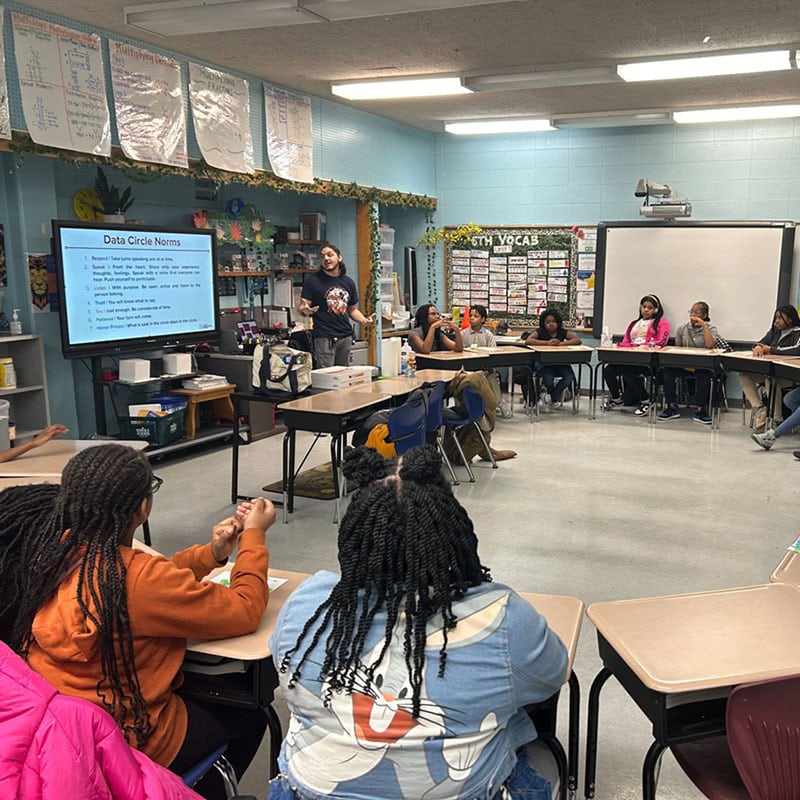
Too often when teachers get data, they don’t know what to do with it. At the University of Chicago Middle Grades Network, we use two protocols in succession (the first with staff members, the second with students) to transform data into effective action. The staff meeting protocol is called “What? So what? Now what?” and based on what we learn from that, we organize a “data circle” with students. Here’s what that looks like in detail.
Tracking  absences quarterly allows schools to spot trends and changes faster, whether they be  something to celebrate or a student who needs more support. When we track the number of absences by quarter, just a few missed days in a row can trigger early intervention or celebration.  
Try Stuff was a hit! Crew advisors were thrilled to hand over some of the facilitation, and students came up with all sorts of creative lessons to share with their Crews.
ELA teachers asked students to connect their personal and cultural identity to the academic content at key junctures in their lessons.
Parkway faculty carved out time in their daily schedule to pull specific groups of students to work on a particular skill or intervention,
By learning to recognize the preferred ways in which people in your life understand love, you can better connect with people.
One of the key principles of continuous improvement is that you should spend a lot of time understanding a problem but this is not necessarily feasible in a large school district
Skip to content