Third-grade reading proficiency is one of the clearest indicators of future success. Students who are not reading at grade level by the end of third grade are four times more likely to drop out of high school (Hernandez, 2011). But in communities like southeastern San Diego, where systemic under-investment has shaped generations of educational inequality, only 28 percent of third graders in the Lincoln school cluster meet this milestone—compared to 53 percent district-wide.
The connection between a lack of reading proficiency and low-income background is well-established. And while the barriers are real, this is a solvable problem—not simple, but solvable. For more than a decade, DEEP San Diego has worked alongside families, schools, and educators to close this gap. And we’ve seen results: In the last three years, reading proficiency among third graders in our partner schools has risen from 28 percent to 34 percent—growth that outpaces the surrounding cluster. Our work has shown that when we focus, align, and act together, change happens.
We have developed a method for growing reading proficiency with three elements: Preparing for kindergarten, reading by third grade, and learning beyond the classroom.
Preparing for Kindergarten
We engage families and caregivers from birth to age five with coaching, bilingual workshops, and access to books, ensuring that children enter kindergarten ready to thrive. This work must begin early, because families are a child’s first teachers. And it must be asset-based, building on the knowledge, language, and strengths families already bring, rather than treating them as gaps to be filled.
Reading by Third Grade
Every K-3 teacher in our partner schools receives professional development in the science of reading, as well as coaching to support structured, phonics-based instruction. School leaders participate in professional learning communities to align instructional practices across classrooms. Through our new Literacy Liberators pilot program, trained tutors from the community provide small-group, phonics-focused tutoring inside classrooms during the school day—expanding instructional capacity and ensuring that more students receive individualized support to become confident readers. This intervention will only be effective if the foundational understanding of the science of reading is already well-understood by the teachers. Specifically, a strong foundation in phonics and the ability to decode words is necessary but insufficient on its own. Teachers need to be prepared to develop fluency, academic language, and comprehension once these foundational phonics skills are mastered.
Learning Beyond the Classroom
After school and during the summer, we provide small-group tutoring in reading along with STEAM enrichment activities designed to build confidence, content knowledge, and curiosity.
This model works because it is comprehensive, relational, and focused. It’s built not around isolated interventions but around coherence and continuity, with families, educators, and communities all playing essential roles.
Based on our work, we have identified three principles that families, schools, and communities can use to ensure students in under-invested communities get support to learn to read.
Reading isn’t just academic—it’s deeply emotional. Students need safety, belonging, and encouragement to take risks with text. Schools that invest in social and emotional learning (SEL), advisory structures, and relational culture already have fertile ground. But culture alone is not enough. Without explicit, systematic instruction in foundational reading, too many children will be left behind.
For example, when children are encouraged to examine mistakes they’ve made, they can see the opportunity to learn. There are two kinds of mistakes that we learn from: competency errors and proficiency errors.
Competency errors are the kinds of mistakes we make when we don’t yet know something—when there is content that needs to be learned. When it comes to decoding, students need direct instruction in spelling patterns so they don’t have to guess. Proficiency errors, on the other hand, are the mistakes we make when we need more practice, fluency, and exposure to a skill or behavior. This is where strong relationships, safe classroom cultures, and a commitment to the process (not just the product) really shine.
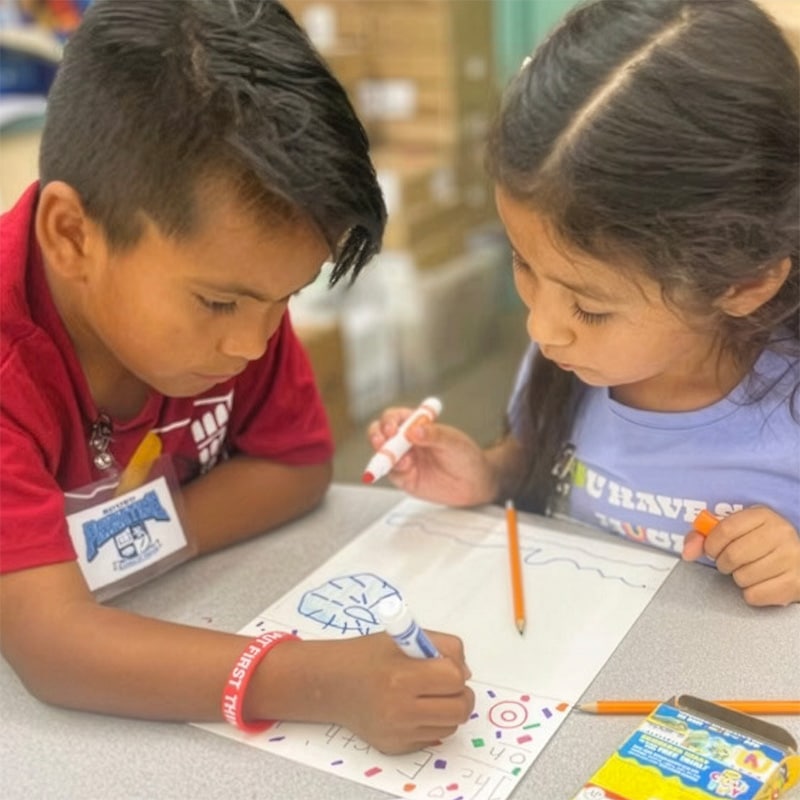
You can see this balance in action during a small-group tutoring session. A Literacy Liberator works with three first graders on short “a” vowel patterns. When a student reads “cap” as “cop,” the Literacy Liberator smiles and says, “Let’s listen to what your mouth is doing—what sound do you feel when you say a?” The student catches the difference. The group uses letter tiles to swap vowels and blend words like cap, cop, and cup. They read a short decodable story together, celebrating when one student correctly reads, “The cat sat in the bag.” It’s a small win born of both warmth and rigor—trust and belonging paired with explicit, systematic instruction. That’s the Goldilocks zone where real reading proficiency grows.
Reading sticks when it is connected to meaning. When students are immersed in authentic projects, inquiry, or real-world contexts, they see reading and writing as tools to ask big questions and share their ideas with the world. Schools that embrace project-based or inquiry-driven models are well-positioned to harness this if they deliberately embed reading, writing, and language instruction into the heart of their work, rather than as an afterthought.
For example, when students are learning specific spelling patterns, they can become “word detectives,” finding those same patterns in the texts they’re reading for a class project. During small-group phonics practice, a Literacy Liberator tutor can introduce the -ing ending, and later that day, students will notice -ing words popping up in the non-fiction text they’re reading for their project. The teacher points it out for the whole class when she hears one of the students recognize it at her small group table.
It’s a simple but powerful shift: Foundational skills no longer seem like isolated drills but purposeful tools for communication. When students see that decoding and spelling help them express their ideas and participate in something meaningful, engagement deepens and reading sticks.
3. Tools and Training Matter
Whole-child schools often have the right ethos but lack the technical tools of evidence-based early reading instruction. Training K-3 teachers in the science of reading and aligning practices across classrooms ensures that the culture and purpose translate into measurable reading growth.
For example, elementary teachers at DEEP schools all participate in the California Reading and Literature Project’s RESULTS training, and receive coaching throughout the year to fortify the practices that flow from the latest research on what works with literacy instruction. Resources to build capacity at your site may include local university partners, the Reading League, and even curriculum publishers (i.e., Amplify and Collaborative Classroom).
Nothing in this piece has likely come as a huge surprise to you. In our experience, what’s often missing in schools isn’t knowledge, but focus. Schools that already embrace student-centered and whole-child approaches are well-positioned to lead the next wave of reading equity work—if they choose to make it central. That doesn’t mean abandoning their values, but leveraging them.
We don’t need a new vision. We need alignment between values and practice. If we believe every child is capable of reading and thriving, we must equip them with the tools to do so—and we must do it together.
The reading crisis is solvable, and we’re obsessed with it. We can close the gap—with skill, love, and a shared commitment to equity.
Three Actions School Leaders Can Take to Improve Reading Proficiency for All StudentsTo Start Tomorrow: Focus and Diagnose:
Why this matters You can’t fix what you haven’t seen. Reading outcomes rise fastest when leaders have a clear, shared picture of instructional practice across classrooms. To Start in a Month:
Why this matters Isolated training doesn’t stick. When professional learning is ongoing, aligned, and connected to real student data, it transforms instruction. To Start Next Year:
Why this matters Sustainable systems—not one-off interventions—close literacy gaps for good. When schoolwide culture, curriculum, and coaching align, results follow. |
Note: Literacy Liberators is a program pioneered by Oakland REACH, being implemented in Oakland Unified School District. DEEP has partnered with them and learned from their experience to implement a pilot in the San Diego context.
Hernandez, Donald J. (2011). Double jeopardy: How third-grade reading skills and poverty influence high school graduation. The Annie E. Casey Foundation. https://assets.aecf.org/m/resourcedoc/AECF-DoubleJeopardy-2012-Full.pdf