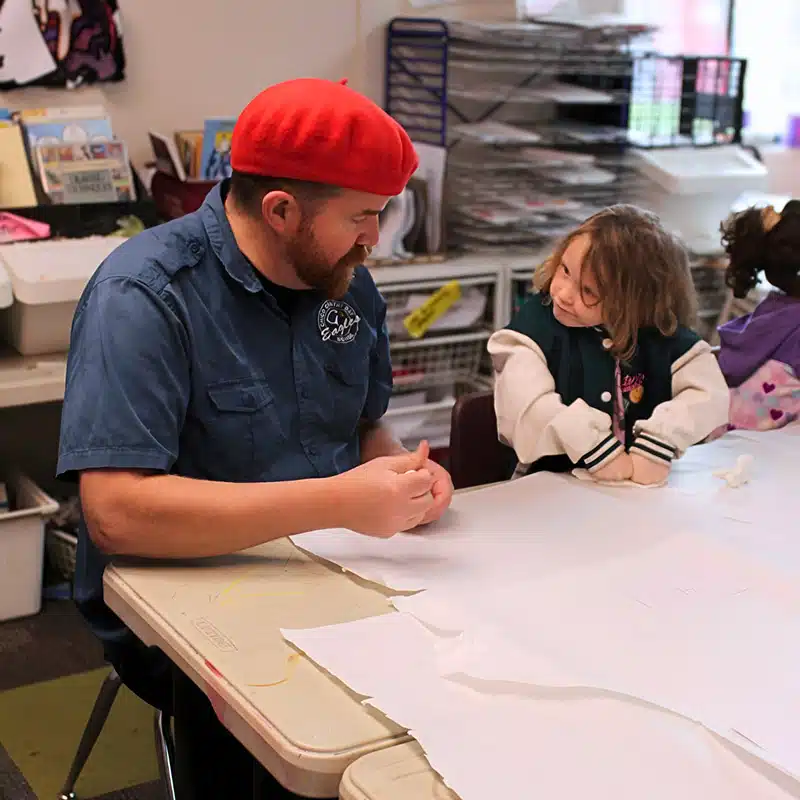
The shift began on a Tuesday morning in October. Our school, which runs from pre-kindergarten 3 to twelfth grade, had just finished a routine walkthrough when a kindergarten teacher pulled me aside. “My multilingual learners never volunteer during morning meetings,” she said. “I know they have ideas. I just don’t think they feel safe enough to share.”
In my years of working with teachers and school leaders as an improvement coach, I’ve learned to listen closely to what is unsaid. Variation is data. Silence is data. And an entire group of kindergarteners consistently being silent in class? That is definitely data.
That moment became our entry point into a year‑long journey of cultivating an improvement science culture grounded in belonging and inclusive teaching. We didn’t start with a strategic plan. We started with a question: What would it look like if we mined for gold in our own community? To put that in more concrete terms, “How do we make it so that multilingual learners are more willing to participate in class, and how will we know if we have succeeded?”
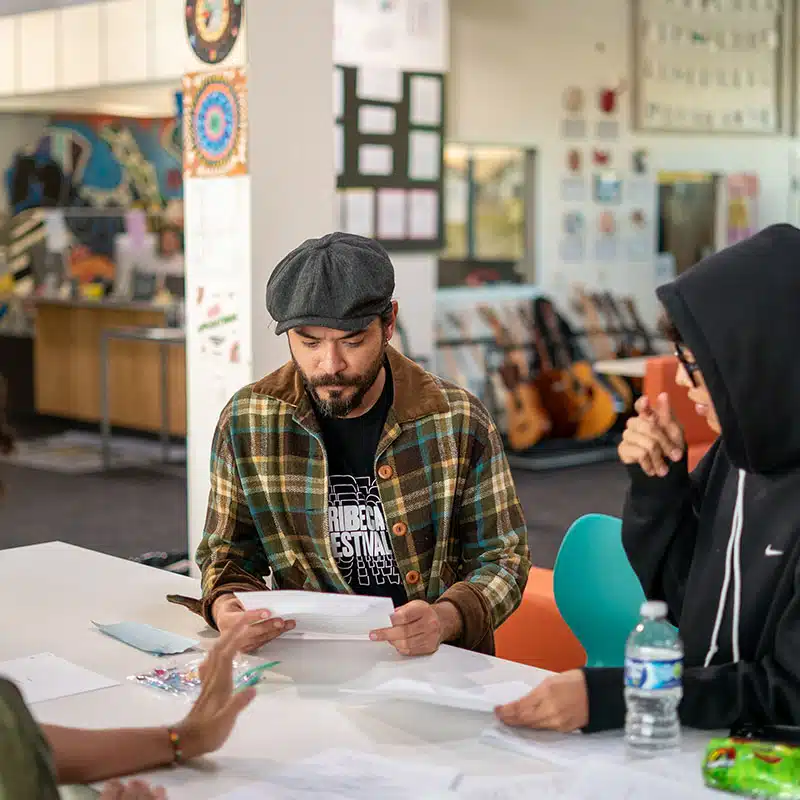
Once we had our question, we began by conducting a series of empathy interviews with multilingual learners (and their families) from a range of grade levels in order to better understand the barriers that were preventing them from participating in class.
From these interviews, we learned the following:
After empathy interviews with multilingual learners and their families, we learned that students feared making language mistakes in front of peers. So we tested three changes:
Teachers introduced these three changes at the same time. Within two weeks, participation increased. Students told us they felt “braver.” Teachers said the room felt different, lighter, and more inclusive.
Teachers noticed that some students, often those with IEPs or emerging language skills, rarely took leadership roles during group work. Using a process map, we identified the issue: roles were unclear, and norms were inconsistent.
We tested:
Students who had previously withdrawn began stepping into facilitator roles. One student said, “I didn’t know I could lead until we practiced it this way.”
Discipline data revealed disproportionate referrals to the principal’s office for African American boys during hallway transitions. Instead of blaming behavior, we mapped the transition process. The variation was glaring: Different teachers had different expectations.
For example, while one teacher might view a student stopping to give a high-five as a positive social connection, another may view it as “willful defiance” or a “failure to comply with hallway flow.”
The result was that some teachers were regularly flagging students, often African American boys, for subjective infractions like disrespect or loitering.
We also learned that some teachers expected students to be absolutely silent in the hallways, while others encouraged students to keep the volume level to that of a quiet conversation. This meant that two students walking down a hallway had to know when to end their conversations, or risk getting a referral from one of the teachers who enforced silence.
These variations in expectations revealed something deeper: Some teachers used transition time between classes as an opportunity to interact with students, while others focused on surveillance.
Students helped us co-design hallway norms to ensure the rules felt fair and communal rather than imposed. Using these norms, we implemented a “warm-strict” routine; a leadership posture that pairs unconditional care (the warm) with unapologetic high expectations (the strict).
In practice, this meant:
The Warm: Every transition began with high-touch engagement, eye contact, individual greetings, and “checking the pulse” of students as they moved.
The Strict: We utilized precise praise and least-invasive interventions to correct off-track behavior immediately and consistently.
By using predictable cues and identical language across all staff, we eliminated the gray areas where bias typically thrives. Students no longer had to guess which version of a rule applied to which teacher; the boundary was firm, but the environment was safe (Bondy & Ross, 2023; Scott & Cooper, 2025).
Referrals dropped. Students said they felt more respected. Teachers said transitions felt less chaotic and “more human.”
A ninth‑grade advisory team piloted a belonging routine that included identity‑mapping, weekly check‑ins, and student‑led circles. The routine spread, not because we mandated it, but because teachers saw the impact. When a ninth-grade team shifts from managing students to cultivating belonging, the impact isn’t just a feeling; it’s a measurable shift in the school’s social and academic ecosystem.
By using identity-mapping, students felt seen as multifaceted individuals rather than just “referral risks.” The weekly check-ins acted as an early-warning system.Student-led circles shifted the power dynamic. The reason it spread without a mandate is what researchers call “social proof.” When teachers, who are often exhausted by initiative fatigue, witness a colleague having a 90 percent reduction in hallway friction, the routine becomes a solution rather than a task (Liou & Daly, 2021; Lyon et al., 2024).
We formed a cross‑grade improvement network to adapt the routine for different developmental stages. Seniors redesigned it for younger students. Middle schoolers added visual tools. PK3 teachers, a specialized developmental and structural bracket that spans from pre-kindergarten 3 through third grade, created a picture‑based version. Improvement became a networked learning ecosystem rather than a top‑down initiative.
By the end of the year, we realized we hadn’t just implemented improvement science, we had become an improvement science school. Teachers described the culture as “curious,” “collaborative,” and “student‑centered.” Students said they felt “seen,” “safe,” and “part of something.” This shift reflects the understanding that true school improvement is not a technical checklist, but a cultural practice rooted in shared vulnerability and a relentless commitment to collective learning. By embedding inquiry into our daily interactions, we have transformed the work of improvement into the way we work, ensuring that our systems are as responsive and dynamic as the students they serve (Bryk, 2021; Hinnant-Crawford, 2024).
Moving forward, we will focus on deepening our plan-do-study-act (PDSA) cycles to ensure that the barriers identified by our multilingual learners are not just named, but systematically dismantled. As documented by Hinnant-Crawford (2024), the strength of this methodology lies in its ability to turn “marginalized voices into the primary architects of school change,” ensuring that equity is a lived experience rather than a bureaucratic goal. This commitment requires a shift from viewing data as a tool for accountability to seeing it as a catalyst for iterative, teacher-led innovation that directly responds to student needs. By standardizing these reflective practices, we ensure that the curious and collaborative culture we have built remains resilient against the shifting pressures of external policy (Bryk, 2021; Lewis & Perry, 2023).
Furthermore, the evolution of our school culture necessitates a shift from individual classroom successes to a Networked Improvement Community (NIC) model. By fostering a “learn-fast” environment where data is used for learning rather than for judgment, we empower our staff to engage in cross-disciplinary problem-solving that targets the root causes of chronic absenteeism among our multilingual populations. According to Bryk (2021), the sustainability of such institutional change relies on the relational trust built during the empathy phase, which allows for the honest critique of existing systems. Our next phase is about sustainability. Through the lens of continuous improvement, we will transform our recent wins in student agency into lasting pillars of our ecosystem, ensuring every student feels safe and empowered by design, rather than by chance.
Ultimately, the journey that began on a quiet Tuesday morning in October, sparked by a kindergarten teacher’s observation of her silent multilingual learners, proved that the system is always speaking to us if we are willing to listen. What initially appeared to be a simple lack of participation was, in reality, a complex data point reflecting deep-seated barriers like language anxiety, quiet exclusion in the curriculum, and a misalignment between school structures and students’ lived realities. By shifting our leadership posture to view silence and variation as vital information, we moved away from technical checklists and toward a cultural practice rooted in shared vulnerability and collective learning.
By mining for gold within our own community, we uncovered the latent brilliance of our students, from the kindergarteners who now feel “braver” to the middle schoolers co-designing hallway norms. This process of improvement science transformed marginalized voices into the primary architects of school change, ensuring that equity is a lived experience rather than a bureaucratic goal. As we continue to iterate through our learning cycles, we remain committed to this networked ecosystem, ensuring that the gold we discovered remains a permanent pillar of a school where every student feels safe and empowered by design.
Bondy, E., & Ross, D. D. (2023). The resilient teacher: Moving beyond survival to thrive. Routledge.
Bryk, A. S. (2021). Improvement in action: Advancing quality in schools and systems. Harvard Education Press.
Hinnant-Crawford, B. N. (2024). Improvement science in education: A primer (2nd ed.). Myers Education Press.
Legette, K. B., Garner, P. W., & Halberstadt, A. G. (2026). Classroom discipline experiences and Black youth student-teacher relationships and classroom engagement. Cultural diversity & ethnic minority psychology, 10.1037/cdp0000784. Advance online publication. https://doi.org/10.1037/cdp0000784
Lewis, C., & Perry, R. (2023). Building a knowledge base for school improvement: The role of lesson study and improvement science. Journal of Educational Change, 24(3), 411–435. https://doi.org/10.1007/s10833-022-09462-w
Liou, P. Y., & Daly, A. J. (2021). Diffusion of innovation in school social networks: The role of teacher leaders and social capital. Teaching and Teacher Education, 103, 103364.
Lyon, A. R., Cook, C. R., Locke, J., Davis, C., Powell, B. J., & Waltz, T. J. (2024). Importance and feasibility of strategies for implementing evidence-based practices in schools. Journal of School Psychology, 102, 101267. https://doi.org/10.1016/j.jsp.2023.101267
Scott, T. M., & Cooper, J. T. (2025). Functional behavior assessment and intervention in schools. Pearson.