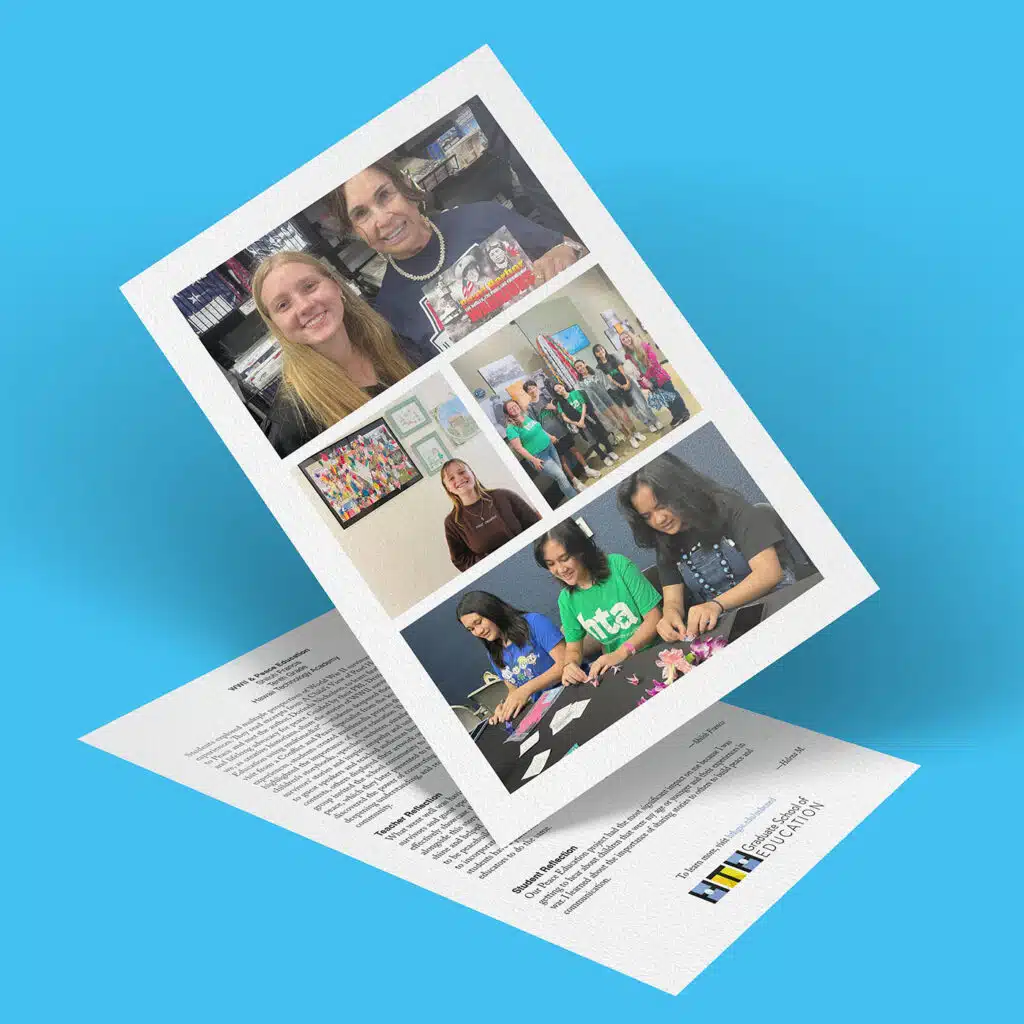
Students explored multiple perspectives of World War II survivors, including children’s experiences. They read excerpts from A Child’s View of Pearl Harbor – From Attack to Peace and met the author, Dorinda Nicholson, to learn firsthand about her story and lifelong advocacy for peace. Guided by their PBL Driving Question—“How can we, as creative historians, share the stories of WWII survivors and the lessons of Peace Education using multimedia?”—students deepened their understanding through a visit from a Conflict and Peace Specialist from the local university. Inspired by these experiences, students created multimedia projects that humanized the realities of war and highlighted the importance of peace education. Their projects took many forms—videos, children’s storybooks, speeches, websites, simulations, and artwork—all designed to share survivors’ stories and inspire empathy and understanding. Students presented their work to guest speakers and reached audiences beyond the classroom. Some entered speech contests, others displayed their artwork on campus and at the local university, and one group invited the school community to fold 2,000 paper cranes as a collective wish for peace, which they later presented to two WWII memorials.Through this project, students discovered the power of connecting personal stories to history—cultivating empathy, deepening understanding, and recognizing the enduring value of peace in our global community.What went well was having students connect to primary sources of real stories of survivors and guest speakers. They had to carefully consider how their project could effectively showcase the person’s story and how they would incorporate the need for peace alongside this story of war. The variety of project choices allowed students’ creativity to shine and helped their audience connect with the skills people can and must develop to be peacebuilders, educators, and advocates. I have revised this project several times to incorporate local stories and field studies, as well as speech or video contests, so that students have a platform to showcase their learning to a wider audience. I encourage other educators to do the same.
—Shiloh Francis
Our Peace Education project had the most significant impact on me because I was getting to hear about children that were my age or younger and their experiences in war. I learned about the importance of sharing stories to others to build peace and communication.