On a Tuesday afternoon in the spring of 2019, a group of teachers stayed after the final bell rang. There was no external consultant in the room, no slideshow prepared by an expert. Instead, there were lesson plans spread across tables, notebooks filled with questions, and a shared concern: Why were some of our best ideas not translating into better learning for students?
One teacher who had just finished a project-based learning unit raised a stack of student reports. “I thought this project would work,” she said, flipping through the pages, “but most students just followed the steps without really understanding.” Another teacher nodded. “The same thing happened to me—they completed the task, but they didn’t take ownership.”
At the time, we had begun to notice a recurring pattern across our schools. Teachers regularly participated in courses, workshops, and conferences. These experiences were often inspiring—but once teachers returned to their classrooms, the impact rarely lasted. Daily routines, time pressure, and the isolation of individual practice made it difficult to achieve sustained change.
Not everyone was convinced that meeting after school to talk about practice would make a difference. Some teachers questioned the value of “just talking with colleagues” instead of receiving input from experts. Others were simply exhausted. As one teacher put it: “I already have too much to do—how is this going to help me tomorrow in my class?”
Instead of searching for another external solution, we asked a different question: What if teacher learning started in our own classrooms?
Cultivating Our Professional Learning Community
That question led us to experiment with professional learning communities (PLCs) across the Roberto Rocca Technical Schools Network.
Our first PLC meetings were simple—and sometimes messy. Teachers gathered after school with lesson plans, student work, and unresolved questions. There was no expert leading the session, and at times, that absence felt uncomfortable. Some meetings drifted into general comments or polite agreement. In others, teachers hesitated to share what had not worked.
We quickly realized that having time together was not enough—we needed to use that time differently.
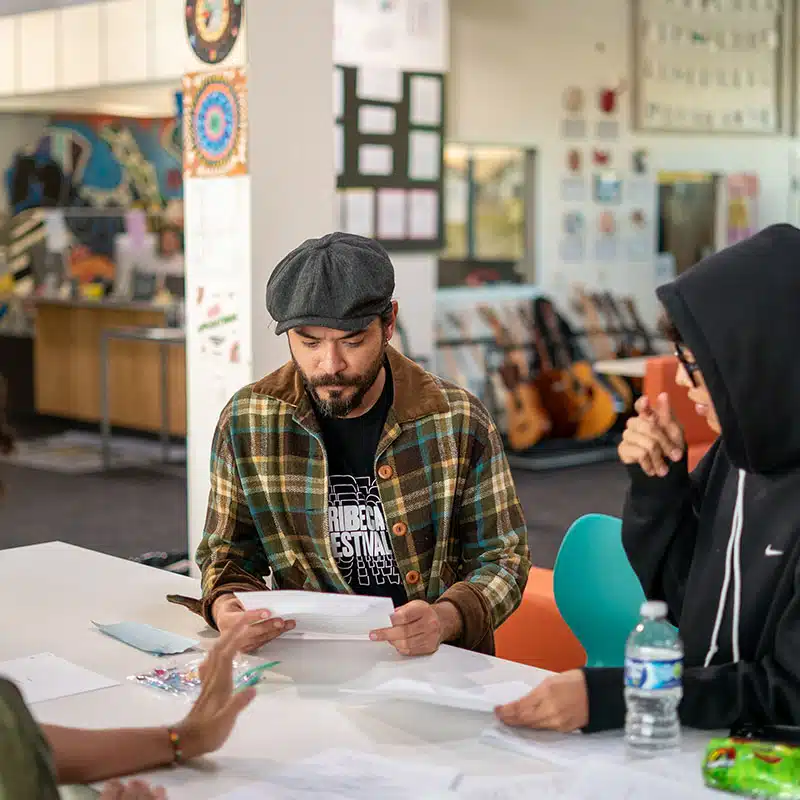
Over time, these meetings developed a rhythm. Teachers came prepared to share evidence, rather than polished success stories. One math teacher brought a set of assessments and admitted, “I don’t understand why half the class failed this question; I thought I explained it clearly.” Instead of offering quick advice, colleagues began asking questions: What exactly were students struggling with? What did their answers reveal? What could be tried next?
Together, they analyzed student work, discussed alternatives, and committed to small changes they would test in their classrooms. Reflection became collective rather than individual. The conversation shifted from what went wrong to what we could try next week.
This shift was not only methodological—it was deeply cultural. Teaching, which we had often experienced as a private act, started to become a shared practice. Teachers began to see themselves not only as instructors but as learners engaged in ongoing cycles of inquiry grounded in their own classrooms.
From Private Act to Shared Practice
One of the most powerful—and challenging—changes was to make practice visible. Sharing unfinished work required trust, and that trust was not built overnight. In early meetings, some teachers brought only their “best” examples. Others stayed mostly silent. But over time, vulnerability became more common. A teacher would say, “This didn’t work at all—I need help thinking it through,” and that opened the door for deeper learning.
Not everything worked at first. Some meetings continued to drift into logistics. Others lacked focus or ended without clear next steps. We had to make explicit decisions to protect PLC time for learning—not administration—and to prioritize depth over speed. PLCs needed consistency, stable groups, and time to mature.
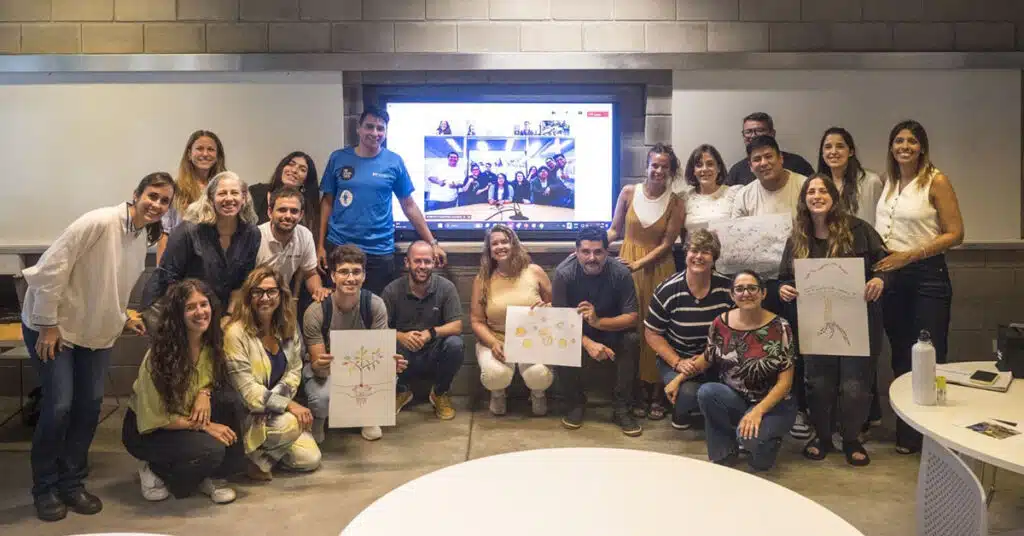
As the work strengthened locally, it expanded globally. Teachers from Argentina, Mexico, and Brazil began meeting around shared themes such as project-based learning, self-directed learning, and digital education. Despite different contexts, the conversations sounded surprisingly similar: concerns about student autonomy, questions about assessment, and the challenge of moving from activity to learning. Teachers often shared examples of students who completed projects successfully—building, presenting, or delivering final products—but showed limited understanding when asked to explain their reasoning, make connections, or transfer their learning to new situations. These cross-site exchanges reinforced a powerful idea—that teachers were not alone in their struggles.
Today, PLCs are a core practice in our schools. Teachers share a common pedagogical language, innovations spread more easily, and professional learning is embedded in daily work. Most importantly, students benefit from classrooms shaped by teachers who continuously learn with others.
How Our PLC Works
PLCs are part of our regular school structure, not an extra initiative. In our schools, teachers meet at least four times a year, during the school day. Meeting times are coordinated based on teachers’ schedules, but they always take place during class hours—never after the school day ends. Protecting this time within the workday reinforces the idea that professional learning is part of teaching, not an additional task.
Each PLC is made up of a small, consistent group of teachers—typically between four and eight—who share a common focus. Sometimes they teach the same subject or grade level; other times, they are connected by a shared pedagogical interest, such as project-based learning or student autonomy. Keeping groups small and stable helps build trust and allows conversations to deepen over time.
While there is no rigid script, our meetings tend to follow a simple and predictable structure:
- Opening (5–10 minutes): The group briefly reconnects and sets the focus for the session. One or two teachers introduce a specific problem of practice they want to explore.
- Examination of practice (40–50 minutes): During the core of the meeting, teachers share concrete evidence—student work, assessment results, lesson plans, or classroom dilemmas. The group analyzes this evidence together, asking questions before offering suggestions.
- Planning next actions (10–20 minutes): Teachers identify one or two small changes to test in their classroom. These are intentionally manageable so they can be tried in the following weeks.
- Closing (5–10 minutes): The group reflects briefly on what was learned and, when relevant, connects it to ongoing work from previous meetings.
Each PLC is guided by a teacher who leads the community throughout the year. The role of this facilitator is not to provide answers, but to sustain the focus on learning, support productive dialogue, and ensure that conversations remain grounded in classroom evidence.
Lessons We’ve Learned
- Start with real problems of practice. PLCs work best when conversations begin with authentic classroom challenges, not abstract theory or generic goals.
- Make practice visible early. Student work, lesson plans, and assessment tools anchor discussions in reality and prevent conversations from staying superficial.
- Protect the focus. When PLC time turns into logistics or announcements, learning disappears. Clear norms help keep the work pedagogical.
- Go slow to go deep. Trust, reflection, and improvement take time. PLCs cannot be rushed or compressed into occasional meetings.
- Accept discomfort as part of learning. Sharing unfinished or unsuccessful work feels risky, but it is often where the most powerful learning happens.
- Think beyond one school. Global or cross-site PLCs expand perspectives and remind teachers they are part of a larger professional community.
- Treat PLCs as a practice, not a program. Their strength lies not in a prescribed structure, but in sustained habits of collaboration and inquiry.