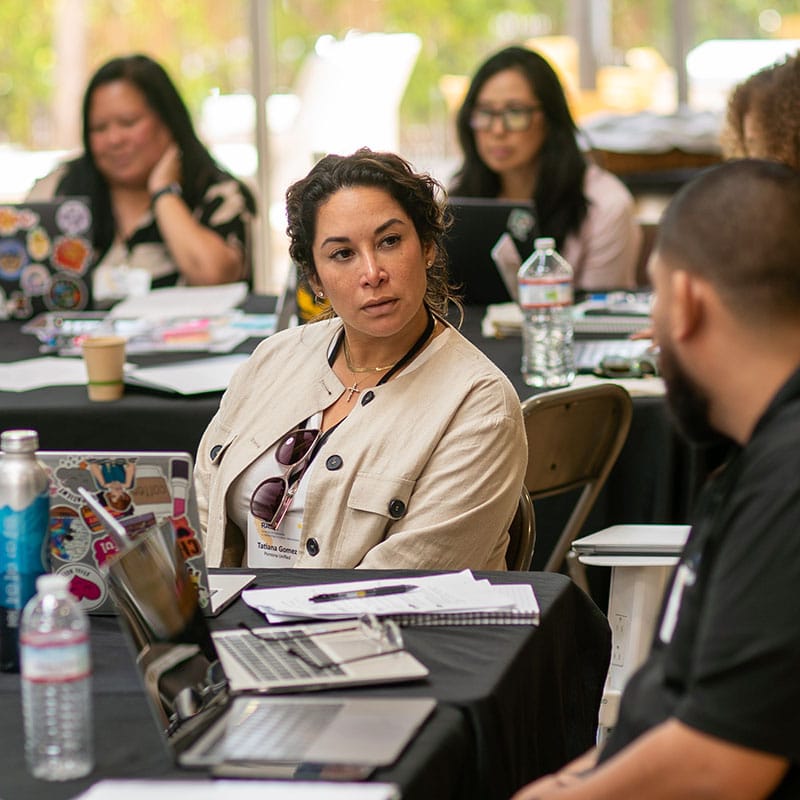
A few years ago, I attended an improvement review for a project being undertaken at the High Tech High Graduate School of Education, where I am president. As such, I had an official role within the review: project sponsor.
I had assumed that the main reason the “project sponsor” attended the improvement review was to demonstrate that the organization was taking it seriously. I didn’t expect to play an important role in the review itself. So I was taken aback when, midway through the review, the improvement reviewer, Brandon Bennett, turned to me and said, “Ben, this isn’t a problem for your colleagues. This is a problem for your institution: You’re the president of this graduate school, and this is your problem to solve.” At that moment, I realized that I had been facilitating improvement reviews—a key protocol in our organization’s culture and functioning—the wrong way, toward the wrong goals.
Improvement reviews are a structured conversation with two goals. The first is to provide expert feedback and support to an improvement team. The second is to provide expert feedback and support to the senior leadership team. The improvement reviews I had instigated were missing the first goal because we were trying to give equal weight to every voice in the room. They were missing the second goal because I thought of protocols as being designed primarily to help the presenter solve problems—I hadn’t understood until that moment that improvement reviews are also designed to change the behavior of an organization’s leadership team.
I want to take these two goals in turn, unpack the assumptions that led me to miss them, and explain the ways in which my thinking about them has changed.
At High Tech High, we have spent 25 years implementing protocols such as the “project tuning protocol” and “looking at student work protocol.” These protocols emphasize equality of participation, meeting people where they are, and reducing defensiveness that may occur in response to feedback from colleagues. The improvement review differs from these protocols in two important ways, which leads to different benefits: First, within the improvement review, we intentionally value expertise, even within a culture in which we’ve worked to dismantle hierarchies; and second, improvement reviews are not exclusively focused on the presenter—they also deliver feedback to senior leaders, who should also help solve problems.
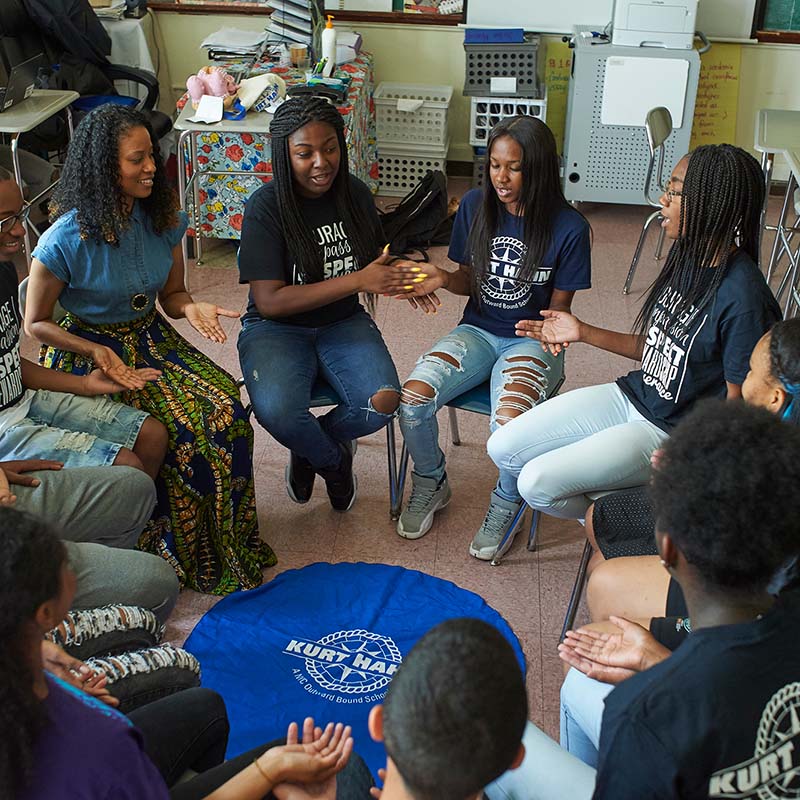
Another structured conversation for providing feedback is the dilemma consultancy protocol, popularized by educators from National School Reform Faculty and the Coalition of Essential Schools, among others. At the heart of the consultancy protocol are a few beliefs about human capacity: that everyone has something to learn and everyone has something to teach. Also, first seek to understand, then seek to be understood. The egalitarian and structured nature of the consultancy protocol emphasizes and enforces good behaviors, such as “First ask clarifying questions” before you come charging in with your advice, especially because it may be based on incomplete understanding. Another is, “Make sure you are providing feedback that is aligned with what the presenter is asking for.” At High Tech High, we have found that structured conversations such as the consultancy protocol help set important cultural norms. Through these protocols, we have cultivated a culture that believes even first year teachers have an important voice to contribute to the conversation, and even young students can provide feedback to educators and help them see their problems more clearly.
The dilemma consultancy protocol is a powerful tool for building culture and giving people feedback on their work. But I realized what I had done over the past decade was to unintentionally turn the improvement review back into a dilemma consultancy protocol. I bristled at the notion that some people in the conversation have important expertise that is especially useful to hear so we should prioritize their speaking time. Similarly, I did not appreciate emphasizing the positionality of some senior leaders in the room given my egalitarian values. As a result, we missed two benefits: that an improvement reviewer, focused on the improvement process itself, is well positioned to provide particularly useful feedback; and that acknowledging the reality of the formal leader who is connected to the project creates an opportunity to “move upstream” and solve problems at the system level.
In addition to the team whose work is being reviewed and other colleagues who join the process, there are two specialized roles within an improvement review which I mentioned briefly above: the improvement reviewer and the project sponsor. I’ll talk more about the project sponsor in Goal 2. For now, let’s focus on the improvement reviewer, who is often, although not always, someone who does not work for the organization. Ideally, the improvement reviewer has previously participated in many improvement reviews, which enables them to quickly identify patterns in projects. With that said, as educators we need to build a deeper bench of strong improvement reviewers. The improvement reviewer has a specific role, which is to attend to the improvement process itself. As Brandon Bennett put it, “When I am acting as a reviewer, I turn the content part of my brain off.” Rather than opining about literacy strategies or math pedagogy, the reviewer puts their attention to questions such as, “Does this project have a strong aim statement? A strong theory of action? An appropriate data system?” “Does there appear to be a will to change, both from the team and from leadership?” “Does the team appear to be executing well with consistent meeting routines and suitable project management?” Freeing up the improvement reviewer to focus their attention and feedback on the improvement process itself creates an opportunity for a different type of feedback than is typically offered by other processes.
One thing we learned early on at High Tech High is that dilemma consultancy protocols can veer into areas outside the presenter’s control. Your frustration with your colleague (“I just wish Bob would change his behavior…”) is not a good dilemma to discuss during this protocol. At the heart of the dilemma consultancy is the idea that with support, people can solve their own problems. We attend to this by reminding everyone to focus on both problems and solutions within their control.
I brought this mentality to improvement reviews, and as a result it took me a long time to understand that, unlike dilemma consultancy, improvement reviews are designed to veer into areas outside the presenter’s control. To explain this further, let’s return to the second specific role in an improvement review: the project sponsor. The project sponsor is a person with formal leadership authority who is most connected to an improvement project. He or she has a responsibility to champion the work, clear roadblocks, direct resources and attention, and provide support to the effort. The project sponsor has become a formalized role within continuous improvement efforts because it is clear that when an improvement project does not have a clear champion at the senior leadership level, there are significant limitations on how far the project can go, particularly in terms of sustained, systemic change.
When we started creating space in the process for the improvement reviewer to provide feedback to the project sponsor, we immediately realized that it wasn’t always clear who the project sponsor was. Maybe there wasn’t anyone in a formal leadership role who realized that they played an important part in the success of this effort. Or maybe there was, kind of, but it had not been made explicit. Or maybe there was, but that person wasn’t invited to the improvement review. Getting more explicit about who the project sponsor is, holding the improvement review when the project sponsor can attend, and insisting on making feedback to the project sponsor part of the process are important next steps to strengthen the potential of the review.
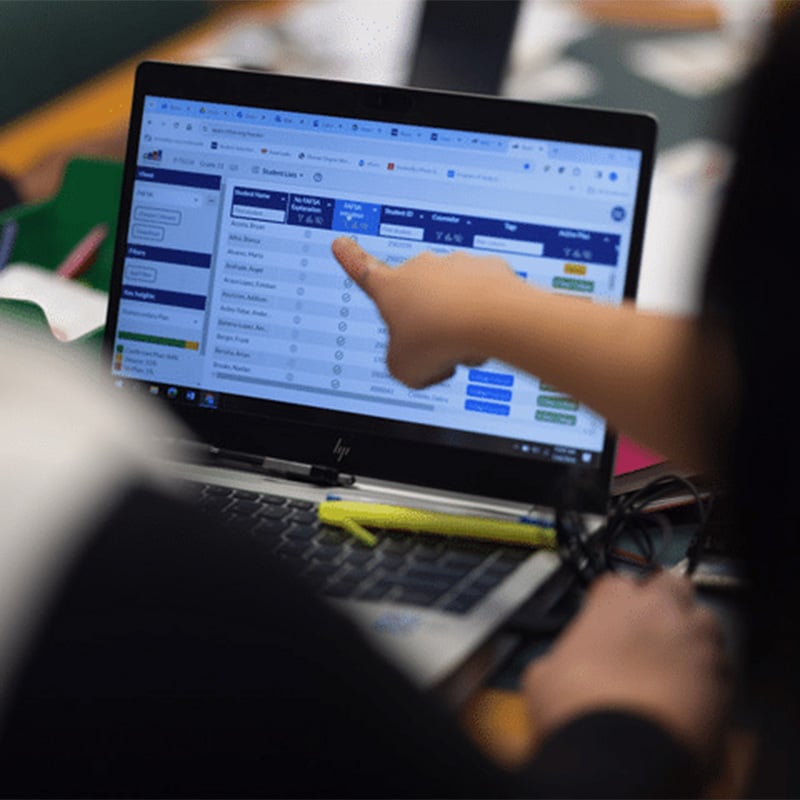
Another feature of improvement reviews that is often invisible to participants is the opportunity to find patterns across projects. In some cases, we hold multiple improvement reviews on the same day, with common senior leadership across projects. For example, we recently held a series of improvement reviews with the chief operating officer in attendance in which we reviewed projects on admissions, facilities, and food services. By having a common senior leader across each of these reviews and a common improvement reviewer critiquing the work, it became easier to zoom out and see the common challenges that seemingly disparate internal teams experienced across their projects.
One essential part of the review protocol is the opportunity to give senior leaders feedback, which is shared publicly to everyone in the review, just as critical feedback is given to the presenting team. It is important for everyone to see that we all can grow from feedback. However, there is also value in gathering a small group of senior leaders and improvement reviewers to explore themes across projects. In our reviews, we have noticed patterns such as “Communication with the school principals has become a bottleneck to progress across multiple projects; how can we address that more holistically?” Or, “We have too many teams just brainstorming new ideas as opposed to learning from others outside our organization who have already made progress; we need to build time into our next meeting to scaffold that type of work.” Seeing system-level trends creates the possibility to improve the broader organization, not just the specific projects currently underway.
The improvement science guru Edwards Deming claimed that only 6 percent of problems in an organization are caused by individual employees, whereas 94 percent of problems are created by the underlying system that employees are working within. And the people in the organization best situated to improve the underlying system are those in leadership positions. The improvement review, when structured to provide feedback both to improvement teams and those in leadership positions, is a tool that can help organizations tackle big problems at both the individual and systems levels.
In that improvement review a few years ago, Brandon Bennet, as improvement reviewer, challenged me, as project sponsor, to take more ownership of the problem. Colleagues of mine were working on a project to attract more schools to their network. They had a successful network that was getting great results with students, but they needed to improve how they could get the word out to schools to join their network and benefit from this work. This is, of course, a challenge across many of our teams. The solution was not just for each team to work harder, although hard work remains ahead. Part of the solution was for our institution, staffed primarily by educators, to build capacity in communications, marketing, and sales, across our teams, to share our work more effectively. And that requires learning, attention, and the direction of resources from me as a senior leader. I’m working on it.
When I first experienced improvement reviews, I liked the idea of them, but I rejected the parts that seemed to reinforce hierarchy. I had not intended to insulate myself from getting feedback on the ways in which I was part of a problem but also could be part of the solution. But that was the result of emphasizing an egalitarian approach to participant voice over benefiting from expertise in the improvement process and downplaying the reality that some people occupy formal leadership roles.
In my own institution, the norms and values embodied in the consultancy protocol run deep, as well they should. Holding improvement reviews with expert feedback on the improvement process and explicit feedback to senior leadership will require both a clear protocol but also attention to the cultural norms and values that guide such a review. This includes making it explicit why an improvement review operates differently from other protocols with which my organization is familiar. Let’s conduct improvement reviews that attend to the improvement process and provide feedback to all levels of the system in the service of improving our schools and organizations and getting better outcomes for students.