Randy Scherer is Director of the PBL Leadership Academy, a collaboration between the California Department of Education and High Tech High to grow and improve project-based-learning across California.
More than once in my work as a professional learning facilitator, I’ve heard educators say, “We tried PBL, but it didn’t work.”
When I ask them to elaborate, they say something like, “We tried PBL, but math scores did not go up compared to last year.” Or, “We hired this PBL professional learning organization, but standardized test scores stayed the same.”
I hear them. Teaching is a complex skill, and becoming a good enough PBL educator to raise test scores takes time. That said, the ever-present focus on standardized test scores hides opportunities to recognize and build on important progress that is likely already happening in their schools, and is essential for academic success, as well as the overall success of students, teachers, classrooms, and the larger school community.
For the record, high-quality PBL is empirically linked to high standardized test scores (De Vivo, 2022). And, fundamentally, the building blocks of PBL—group work, open-ended problem solving, engaging discussions, presentations for authentic audiences, etc.—are known as active learning, and these are tied to a wide range of positive academic outcomes.
To make PBL work, educators must embrace all that it offers, from opportunities to embed social emotional learning, build deeper learning competencies, and increase levels of family engagement. This means building fluency with different methods: The most effective PBL teachers show students that individual PBL lessons offer benefits on multiple levels, and teach them how to access them (Deslauriers et al., 2019).
Because PBL opens up such varied opportunities for learning, PBL educators have the distinct advantage to make progress in areas that can be measured more quickly and readily than test scores offer. Imagine a school administrator who instead said the following: “We tried PBL, and test scores held steady, while we saw an increase in the number of students who see connections between their school work and potential careers.” Or another, who said, “We tried PBL, and we saw better outcomes in deeper learning competencies like collaboration, communication, self-directed learning, and academic mindsets.” Or yet another who said, “We tried PBL and we saw significant increases in family engagement.”
All of these outcomes can be measured, and all are important to a school’s overall effectiveness, especially to actual student success. It is a safe bet that the leading indicators of academic success are also measurable outcomes of high quality PBL: connectedness to school, belief that academic work is important for life, understanding the connections between schoolwork and college or career, academic mindsets, social-emotional learning, and more. In fact, standardized test scores are a lagging indicator of essentially any academic intervention, because they rely so heavily on the success of other conditions and competencies that must be established first. PBL provides a framework for educators to build the mindsets, skills, and conditions necessary for student success on a standardized test, and to recognize that these factors are inherently valuable on their own merit.
Imagine that one day in class, you show students how to navigate an important mathematical skill—perhaps your class is analyzing data or learning to graph parabolas. You show them an example, explain how it exists in the real world, and students work through a problem set, initially with your support and then on their own. Problems not finished in class become homework; in a few days there will be a quiz to make sure they acquired the skill. Students can correct mistakes on their quiz to regain missed points. Next week, they will learn a new skill, and the experience repeats itself. You show an example, explain an application, and the students complete problem sets and quizzes. Nothing out of the ordinary for the vast majority of math students across the country.
Now imagine a different way to learn to analyze data: Two days ago, your students met with a local nonprofit organization that analyzes environmental water in your community. They visited a local river, identified pollution entry points, and took water samples. The river is host to countless animals that capture the students’ imaginations, and it feeds a pond where your students have played since they were little. Today in class, they are analyzing the water quality data. Is it safe to swim in the pond? Will the animals be exposed to harmful contaminants? How do they know? At the end of the week, they will send their analysis to the nonprofit organization for review. In a few weeks, they will present their findings at an exhibition attended by their families and other community members—people who live and work near the river and visit the pond every summer, and who will want to know what the data really means.
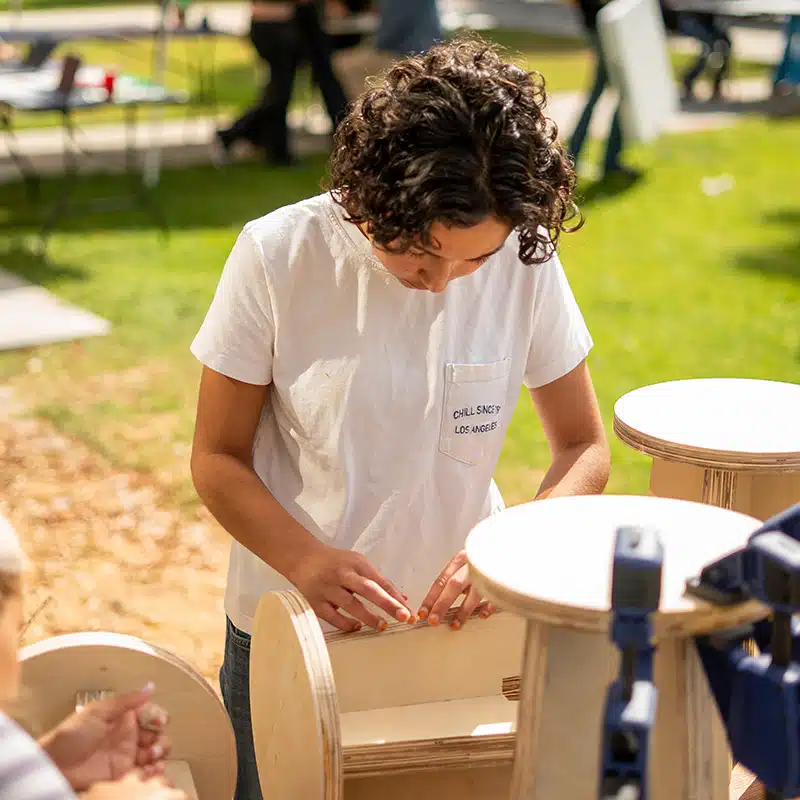
For the teacher graphing parabolas: What if your students had built trebuchets and were preparing for a contest in which they needed to hit specific targets? What if they built model rockets and predicted where they would land? What if they analyzed the flight path of different balls in various sports? What if they built bridges aimed at covering different spans while holding different amounts of weight? What if they engineered solar ovens and used them to prepare food for their families? Think of the many opportunities for richer, deeper learning, full of potential for different measurable outcomes that can show what is working for students, educators, and families.
The point here is definitely not that practicing math skills in class is irrelevant or unimportant! The point is that PBL creates a context in which students see why math skills are important, how they can use them in life or in different careers, and feel motivated to learn them. Once students engage with the types of challenges that PBL offers—how can they help keep the pond clean; who will build the strongest, lightest bridge; who can hit the target with the trebuchet; how can they focus the sun’s energy to cook real food—their math expertise becomes contextualized and essential. Students can see the value of what they are learning from multiple angles: perhaps they are excited by the practical application of their academic skills; perhaps they feel a responsibility to their community partner; perhaps they feel emotionally invested in the outcome or presentation at the end.
One hallmark of PBL is that student learning is embedded within rich social contexts. As a result, it opens opportunities to make measurable progress toward significant goals that are fundamental to success in school and life. PBL typically tasks students to address authentic questions, work in groups, collaborate with their peers, offer feedback on each other’s work, create a product for a meaningful audience, and share their learning with their community. As a result, the stage is set for teachers to guide students to build skills in self-awareness, self-management, social awareness, relationship skills, and responsible decision making—the CASEL framework for social-emotional learning—all of which are as important as standardized test scores, and strongly linked to success within and beyond school. Be clear about this, and PBL can have impacts that stretch far beyond a test score.
PBL core practices create key opportunities for educators to embed social-emotional learning into regular academic education, and to quickly measure their students’ progress. Imagine a teacher who guides students through a protocol to review each other’s plans for a full-sized cardboard boat that will float them across a local lake. How might each student, paired with a peer, navigate a conversation in which they seek advice, have their strengths recognized, learn what to do next, and otherwise manage the social dynamic of the interaction? What experiences might they call upon, and what skills can they develop with the right guidance?
PBL educators can use PBL core practices like the critique process to establish norms for healthy academic and professional communication, using it to teach students to speak so others will listen, and listen when others speak. The teacher can impart a process for sharing information, asking and answering questions, offering and receiving feedback, and documenting the conversation and next steps, while tending to students’ intellectual and emotional needs.
PBL is full of such opportunities to embed social-emotional learning into daily instruction. Common PBL practices like exhibitions, fieldwork with community partners, and drafting and revision are inherently emotional experiences. Students may be full of nerves as they navigate a new social context; they will be excited or heartbroken when their projects succeed or need yet another revision. This emotional engagement is already found in many areas of school that produce lifelong learning: theater, sports, elective classes, clubs, and more. These are all inherently social in their design. PBL can bring this social-emotional engagement to every area of the school.
The deeper learning competencies, initially articulated by research supported by the William and Flora Hewlett Foundation (Vander Ark and Schneider, 2016; Hewlett Foundation, 2013), represent an ambitious set of skills and dispositions that students should acquire in school in order to succeed in Twenty-first century work and life. The six deeper learning competencies are 1) content expertise; 2) critical thinking & problem solving; 3) collaboration; 4) effective communication; 5) self-directed learning; and 6) academic mindsets. Attaining these skills is fundamental to successfully move from school into college, career, and civic life.
PBL is the most promising method by which educators can help students develop these competencies. Importantly, the educator described at the top of this article—the one who focused on test scores—was only engaging with content expertise. Instead, educators should be tending to students’ healthy growth in all six areas.
By situating content expertise within authentic, meaningful challenges, PBL creates reasons for students to push through the discomfort of not yet knowing something. It offers motivation to think critically and solve problems. It fosters a growth mindset by encouraging the process of sticking with something through multiple drafts, and openly teaches that everyone continues to improve with effort. By fostering collaboration and orienting students toward using their knowledge for a purpose in their community, PBL serves as a vehicle to develop students’ sense of belonging.
For this to work, PBL teachers must be clear about what they are doing. Before starting a peer critique protocol, effective PBL teachers show students the benefits of using it, and guide them in navigating the process. Importantly, to maximize the impact of PBL, educators must show students what’s at work within it. PBL educators must tend to students’ perceptions of learning in order to unlock their potential for deeper learning.
Nearly every school has high expectations for their students to achieve proficiency in skills like the deeper learning competencies, whether they use these terms or others that articulate something similar. All schools aim for their students to become critical thinkers and problem solvers, experts in collaboration and effective communication, and positively oriented toward self-directed learning and academic mindsets. Unlike standardized test scores, which only measure content expertise, PBL offers a coherent method for developing and practicing this diverse skillset. We are all familiar with the simple homework checks or weekly quizzes that help educators track progress in the development of content expertise; it is our responsibility to pilot small check-ins that let us see how much our students are growing in all of the domains of deeper learning. When we consistently measure critical thinking, collaboration, communication, self-directed learning, and academic mindsets—which we absolutely can do in ways that are reasonably efficient and deliver powerful impacts—we will have the information we need to make sure that PBL delivers all the benefits it can.
Recently, school-based teams came to the PBL Leadership Academy at High Tech High with a question: How could they use PBL to increase family engagement? Specifically, they had important goals related to family engagement to tend to in their Local Control and Accountability Plan (LCAP), which is essential to the functioning of their school. They wanted to know if PBL offered a way to address this common yet significant problem.
The PBL core practice of exhibitions offered a testable, scalable solution. These schools started by redesigning existing events as exhibitions of student learning. So, for example, out went the old “back to school night” that had primarily been attended only by families new to the school, and in came a model in which students displayed their project work and learning. The end of the story is obvious: When families found out that student work would be on display at the redesigned back to school night, they attended in far higher numbers than when the experience was primarily about meeting teachers and walking a campus they already knew. Measuring the impacts was relatively easy: After implementing this PBL practice, educators tracked how many families attended these different events. With each PBL exhibition, they built a data set that showed increased family engagement.
One way to measure what students have learned, and to better understand how they approach school and their teachers, comes from common surveys like those from PERTS (Project for Educational Research That Scales), California Healthy Kids Survey (CHKS), or similar surveys used by districts across the country. These surveys illuminate student experiences, mindsets, and dispositions that can be improved through high quality PBL. To gather data to know what “works” in PBL, for whom, and under what conditions, the broad topics to survey students about are student connectedness; learning engagement and motivation; social-emotional learning; and student supports such as caring relationships, high expectations, and meaningful participation in school.
PBL educators could work from these topics to understand how their students experience school, or even specific lessons in class, from day to day or week to week. Questions that focus on student connectedness, learning engagement, or motivation will illuminate the deeper factors driving their participation, and the reasons why. When you ask questions about caring relationships, high expectations, and meaningful participation, you will access information adults need to cultivate an environment that promotes consistent student engagement. Add in practices like exhibitions of learning, community partnerships, and collaboration, along with the data to show how students experience them, and PBL can become a lever for whole-school reform.
Teachers can regularly and quickly measure student performance by using simple “exit tickets” that students complete at the end of a lesson or class period. These are simple, low stakes snapshots of student perceptions, usually featuring one or two questions that students answer across a scale ranging from “strongly agree” to “strongly disagree,” using a numerical rating of one to four. A good exit ticket takes no more than two or three minutes to complete. A great exit ticket gives you actionable feedback. If you are wondering how a peer critique impacts social emotional learning in the moment, or how a community partner might affect students’ motivation or sense of purpose, this is the tool to use right away.
To dig a little deeper, use a micro-survey. These are composed of approximately five questions. The goal here is to be a bit like Goldilocks: find a spot in the middle that is just right for you. A short survey given once every few weeks gives you more data points than each individual exit ticket, but fewer than the lengthy surveys that school districts, state agencies, or third parties administer periodically to large groups. If the exit ticket gives a snapshot in time, and the comprehensive surveys typically facilitated by a school district or third party produce an in-depth portrait, a micro-survey should land in the middle: quick and actionable, but more than a snapshot.
Importantly, both the exit ticket and the micro-survey offer more consistent data, and data that illuminate broader, wider areas of growth essential to student success, than do semesterly standardized tests. This data is what tells you what is working in PBL, for whom, and under what conditions. This is the data that educators need to make systematic improvements so that PBL works in the long run.
Personally, I am always interested in the extent to which students agree with simple prompts like, “I do interesting activities in this class,” “At school, I do things that make a difference,” or “I try hard at my schoolwork because I am interested in it.” These help educators see how well a particular lesson activates their students’ sense of meaningful participation or academic motivation. When I think about my most successful lessons as an English and history teacher, I realize I did not merely teach those lessons; together, we created a context in which students wanted to learn. I wish I had done more to document this at the time, as I certainly believe this motivation drove later student success.
If you are not sure what questions to ask, use common ones that often show up on other research-backed surveys. Seemingly simple prompts like, “What I’m learning today is important in the real world,” or “Today’s learning will help me in my life,” or even, “I take pride in my schoolwork” can generate responses that offer valuable insight into students’ perspectives. If educators want to shift these perspectives—and who doesn’t want more students to feel that their schoolwork is important, helpful, and worth taking pride in—it certainly helps to capture these snapshots in simple data. How might their answers change when their school work is contextualized in a real world problem, or part of an exciting challenge, or incorporates them into their community?
To capture information across different components of student success, vary your questions to what matters most to what you are aiming to improve. Ask your students the extent to which they agree or disagree with prompts such as, “In this class, it is okay to make mistakes because we can learn from them,” or “What we are learning in this class is connected to real life,” or “In the past week I felt comfortable sharing my thoughts and opinions in this class.”
Never make the perfect be the enemy of the good. Test new questions in low-stakes ways on an exit ticket, micro-survey, or quick student reflection. The goal is to get snapshots of data that give practical working knowledge to keep taking small steps in the right direction. Two open-ended questions that I rely on to get a quick understanding of how students engage with their learning are 1) “What are you learning?” and 2) “Why is it important to you?”
Every educator knows that there is far more to school (and life!) than standardized test scores. It is natural to want each educational intervention—especially distinctly pedagogical ones like PBL—to have a quick, noticeable impact on students’ academic performance. To make this work, educators need to focus on the appropriate areas in which they can make progress quickly, and the best ways to measure these. Start with the leading indicators of student learning, such as mindsets and perceptions, social-emotional learning, deeper learning competencies. Measure these in small snapshots regularly, so you can see what’s working, for whom, and under what circumstances. Take action quickly, in small tests, so you keep learning as you go.
One thing I’ve learned is that the power and value of PBL are not found in the “P” or the “L” but in the “B.” To make PBL “work,” maximize the contexts that PBL bases learning within. We’ve already tried TBL (textbook-based learning) and LBL (lecture-based learning) and seen the outcomes—those test scores are what drive educators to new curricula and professional learning every year. Teachers and students benefit when we base those resources—the good book and the expert—in meaningful contexts created by well-done PBL. Let’s try learning that is based in real questions, real issues, and real projects, and measure all of the areas in which we make progress.
Deslauriers, L. McCarty, L., Miller, K., Callaghan, K., & Kestin, G. (2019). Measuring actual learning versus feeling of learning in response to being actively engaged in the classroom. Proceedings of the National Academy of Sciences, 116, 39, 19251–19257.
De Vivo, K. (2022, January 24th). A new research base for rigorous project-based learning. Phi Delta Kappan. https://kappanonline.org/research-project-based-learning-de-vivo/
Hewlett Foundation. 2013. “Deeper Learning Competencies.” https://hewlett.org/wp-content/uploads/2016/08/Deeper_Learning_Defined__April_2013.pdf
Vander Ark, T., and Schneider, C. 2016. “Deeper Learning for Every Student Every Day.” GettingSmart.com. https://hewlett.org/wp-content/uploads/2016/08/Deeper%20Learning%20for%20Every%20Student%20EVery%20Day_GETTING%20SMART_1.2014.pdf