This resource was adapted by the CARE Network. It can be used with all ages (including adults!) Additional sources linked below.
Background and Purpose
Sometimes students perceive a problem or prompt that requires a “correct answer” as a threat because there is a chance they could be wrong. Biologically, threats are sent to the amygdala, a small part of the brain responsible for processing emotions. “Amygdala hijack” is a term that describes how the threat of doing or saying the wrong thing leads to our amygdala taking over from our rational brain, inhibiting learning.
A notice and wonder routine stimulates students to be observant and curious by presenting them with a content-related prompt with nothing to solve or answer. It is a great way to spark student interest without risk of amygdala hijack.
Expected Time
10 minutes at the beginning of each class
Materials
Prompts connected to the lesson for the day. These could include a short video of a science phenomenon, a graph, an image, a headline, etc.
How to do it
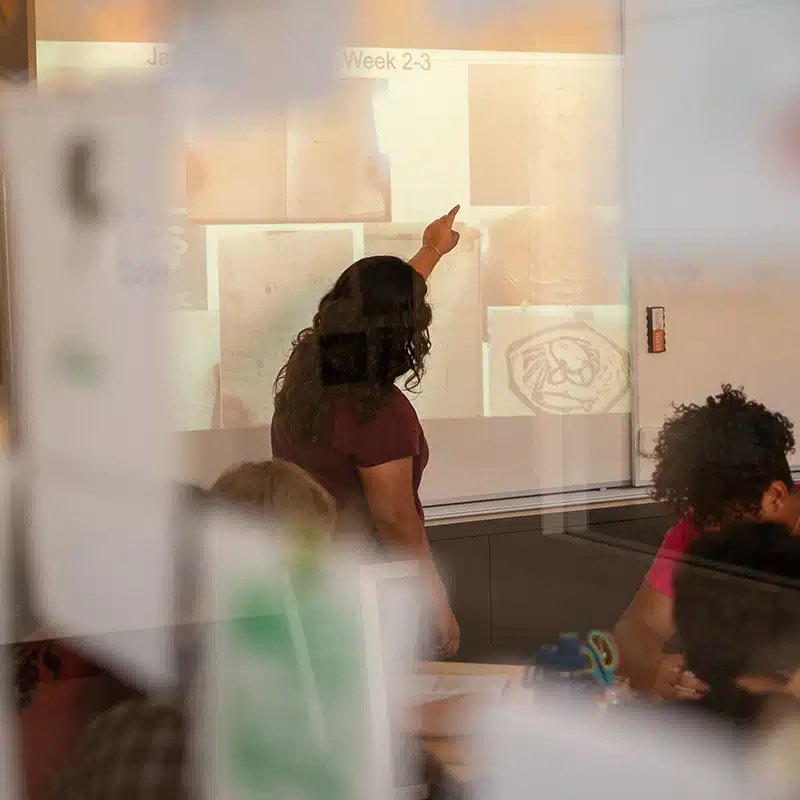
Begin each class by projecting a prompt that is related to the lesson/learning for the day. Avoid prompts that suggest there is a “correct answer”.
Give students 3 minutes (set a timer) to silently write what they notice and wonder about the prompt.
Ask students to put a star next to one noticing and one wondering that they would like to share with a partner.
Give students 2 minutes to share with a partner. Explicitly state who shares first, for example, the person with the brightest shirt. After 1.5 minutes, remind the next partner to share.
Allow 5 minutes to share as a class. Invite students to share either something they noticed/wondered or something they heard from their partner.
Write down student observations with their names next to their ideas.
Use student observations to transition into the lesson for the day.