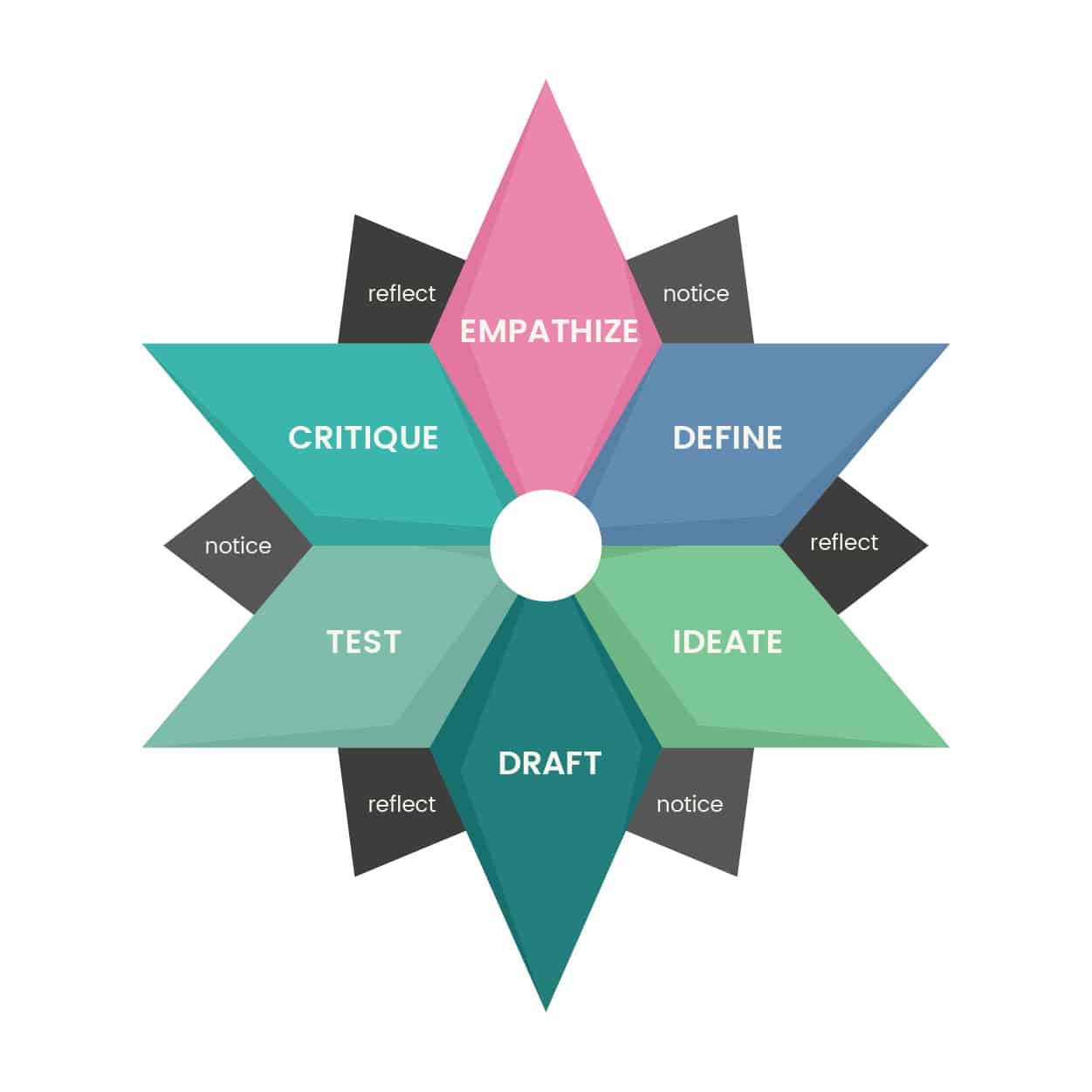
In project based learning, projects are designed to engage students in tangible, purposeful exploration of a theme, topic, or problem. “Design” is not often used to describe what teachers do and when reimagining education, we look to all industries and organizations for ideas. The Stanford Hasso Plattner Institute of Design (the “d.school”) uses a specific diagram to illustrate the steps in the engineering design process. In this method, there is a “user” and a “product” that is created through this process by first understanding the needs of the identified “user.”
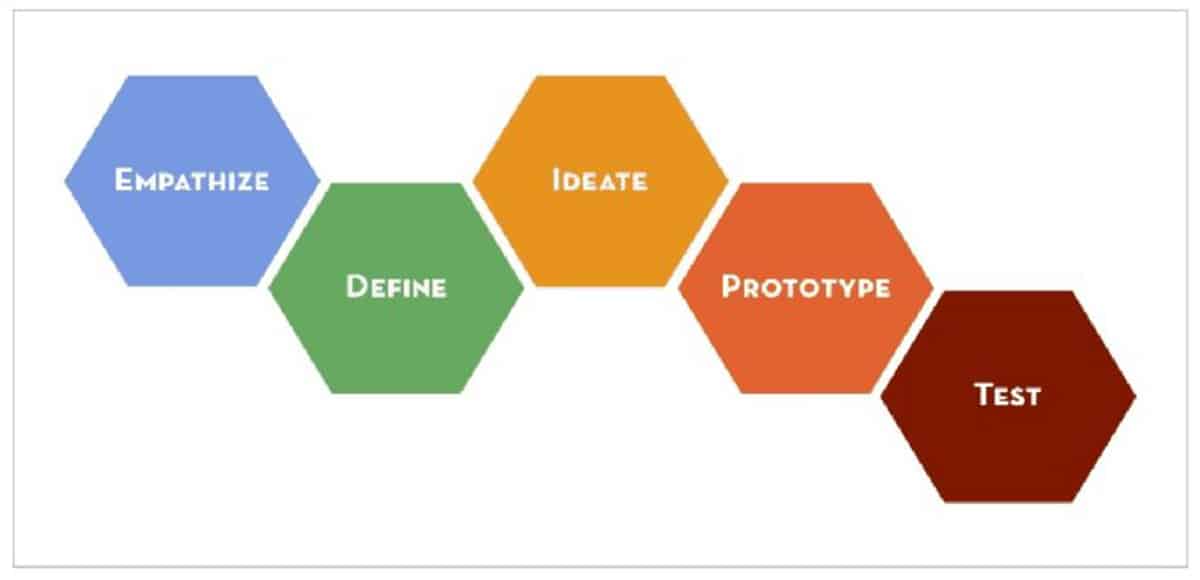
We found that when using this diagram, teachers often felt that the design process was linear and that there was an end. Through reflections and conversations with colleagues, we realized that nothing in education is linear! Flexibility and adaptation are inherent components of teaching and we wanted to see it represented in our design process. This led us to using the next iteration.
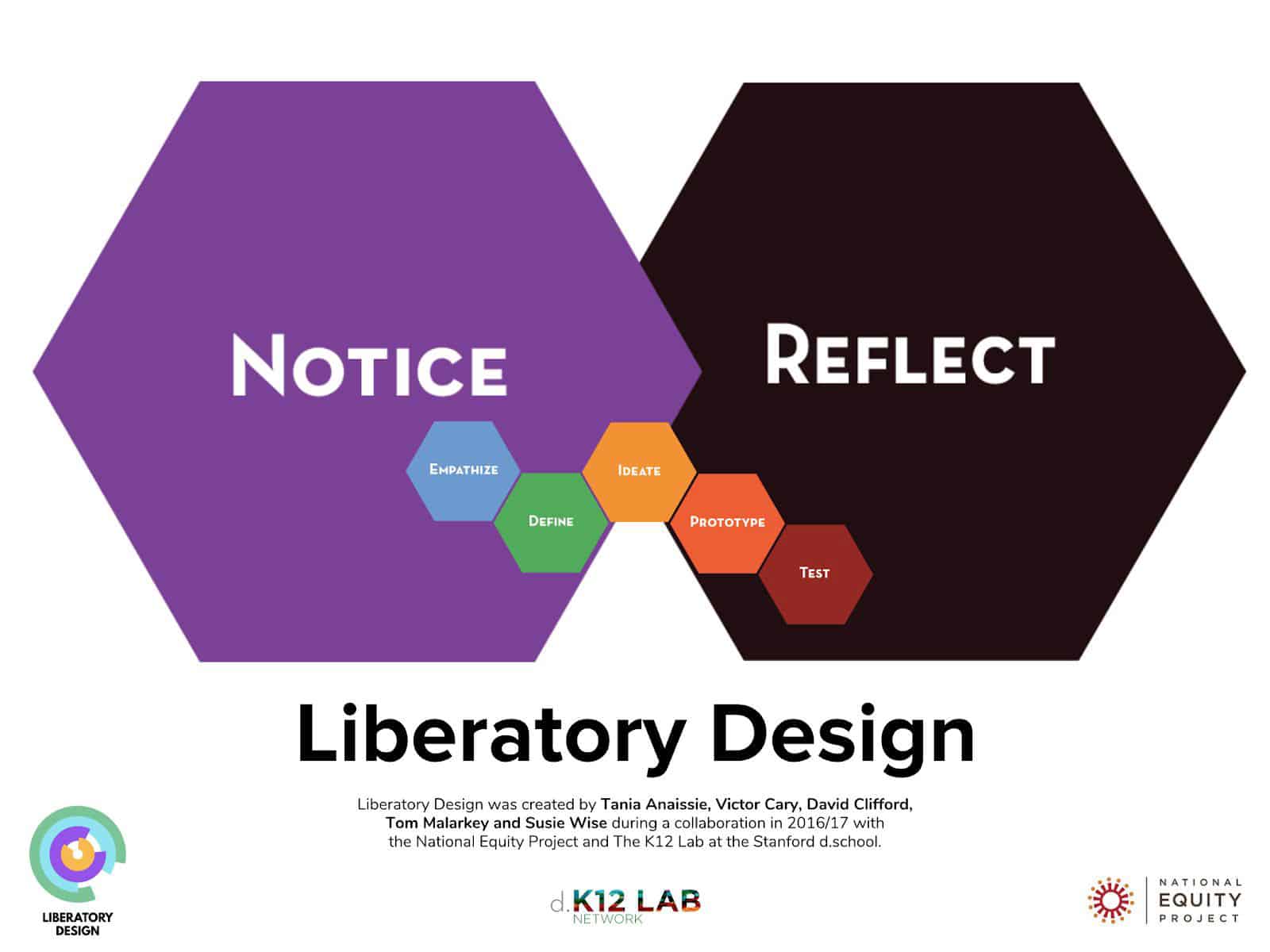
The National Equity Project and Stanford d.School collaborated and updated the design process to identify what needs to be included when designing for complex systems and human experiences. And the diagram was adjusted to include Notice and Reflect as critical components of the process. During each phase, the designer must take stock of what they notice and how they, as the observer, interpret these observations. Reflection is critical to understand one’s positionality and how this might impact the experience of all people involved.
High Tech High Graduate School of Education’s PBL Design Camp has adapted this design process to represent the cyclical nature of designing in education. One acknowledgement is that there are more “users.” A project impacts the students, families, colleagues, community, teachers, and potentially people beyond this list. When designing a project, the empathy work is continuous and there is no wrong direction to step; sometimes you will float between the design phases and sometimes you will turn the design compass to reorient yourself.