SEARCH

Diving in Belize

By

PUBLISHED April 5, 2008

PUBLISHED April 5, 2008

A scuba diver in full gear, including a mask and oxygen tank, explores the vibrant waters of Belize. Surrounded by a stunning blue aquatic environment and rocky seabed, the diver makes an expressive hand gesture with both hands.

Share this

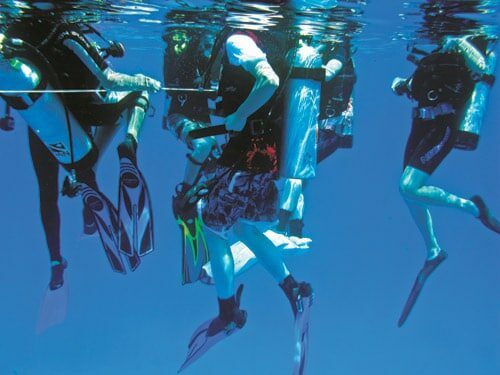
A group of scuba divers is underwater, equipped with tanks and fins. They are swimming in clear blue water, creating a vibrant and lively scene with their colorful gear. Sunlight is visible, filtering through the waters surface.
The shark’s perspective, photographed by Randy Scherer.

When I tell people that I took a group of students to do underwater photography in Belize, the first question is often, ‘Did anyone get eaten by a shark?’ The funny part is that the questioner is typically only half joking—they really want to know if everyone survived.

Establishing a SCUBA program and going on our trip to Belize this March has been one of the highlights of my teaching career. Over the past school year, I have worked with a local dive agency to certify two groups of students as Open Water divers, which allows them to dive recreationally around the world.

My students’ and my interest in underwater photography and diving led us to investigate species identification, marine ecosystems, maritime law, gas exchange laws, nutrition and personal fitness, and underwater photography techniques involving color and lighting. And of course, we needed to raise significant funds for the trip, which involved letter writing, grant writing, community service, and detailed record keeping with digital spreadsheets. Yet this list of ‘topics covered’ captures only a fragment of the experience. The learning became real when students took their first breath underwater and came face to face with a sea turtle, or slowed down to discover tiny creatures in the coral. The photographs here—taken by HTHMA students and me—are the result of these moments.
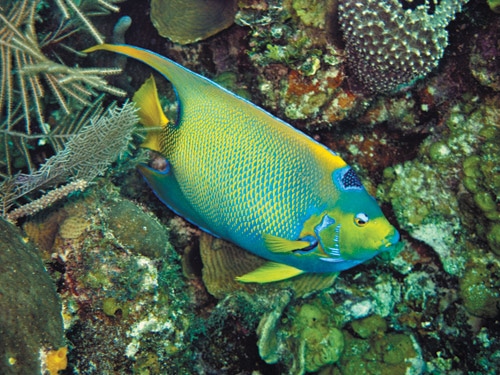
 

A vibrant blue and yellow fish swims among colorful coral and sea plants in an underwater scene. The fish has distinct patterns, and its fin and tail are highlighted against the diverse coral background.
Queen Angelfish, photographed by senior Ahlynna Buenrostro. “During the whole dive I was so excited to get the camera. I felt like a little investigator—a detective. I was thinking ‘I have to take it!’”


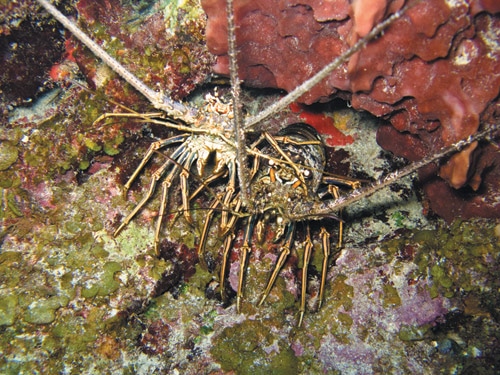
Two spiny lobsters are seen on a coral reef, partially hidden among colorful corals, with their long antennae extended. The reef displays various shades of red, green, and purple.
Spiny Lobsters, photographed by senior Jessica Vazquez. “At first I couldn’t do it because it was too much—I was thinking too much and there were too many things distracting me. But I slowed down and could get up close and hover and use my bouyancy [to take this picture].”
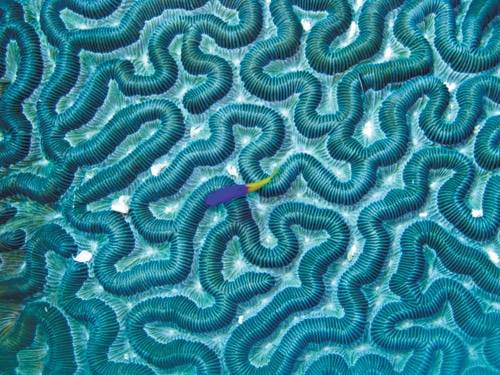
Close-up of a vibrant brain coral with intricate, maze-like patterns in shades of blue and green. A small, colorful fish swims along the grooves of the corals surface.
Brain Coral, photographed by senior Caitlin Macdonald. “I liked swimming over the coral. If you look inside you see really small animals that if you skim over you might miss.”


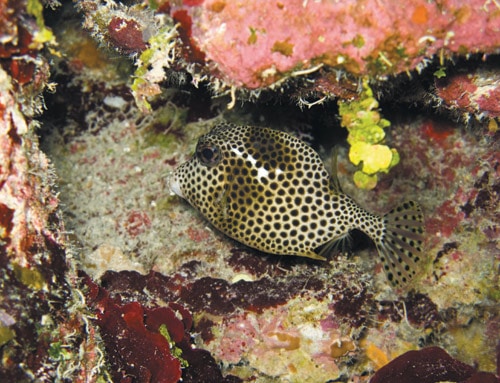
A spotted boxfish swims among colorful coral and marine plants. Its body is covered in dark spots and it has a distinctive boxy shape. The surrounding coral shows hues of pink, yellow, and red.
Trunkfish, photographed by junior Alec Troast. Troast loves diving because “it’s right next to us and all around us and it’s totally different than the world above water.”


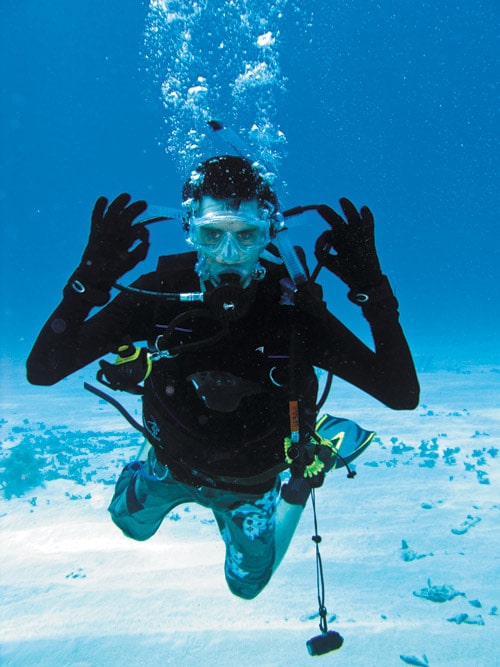
A scuba diver underwater makes an OK hand signal. The diver wears a full scuba suit with a mask, fins, and an oxygen tank. Bubbles rise toward the surface, and the seabed is visible in the background.
Senior Joey Proctor. “I got my advanced certification in Belize and I’m using that to get my rescue certification this summer. I’m hoping to get a job at a dive shop while I go to college.”

TAGS

Most Recent Articles

Skip to content